The AI bubble: you can’t print a power plant
TL;DR
- The money still goes around in a circle. The numbers just changed.
- OpenAI reportedly loses billions a quarter, and companies are burning through their AI budgets in months.
- Power is the real limit. Something will probably burst, slowly, and AI will still be here after.
So, you might have heard that Nvidia was going to invest up to $100 billion in OpenAI. That deal never happened. In March OpenAI raised $122 billion anyway, $50 billion from Amazon and $30 billion each from Nvidia and SoftBank, and a lot of it is tied to OpenAI spending money back with them. Amazon’s part came with a $100 billion expansion of OpenAI’s AWS cloud deal. AMD gave OpenAI the right to buy up to 160 million AMD shares for a cent each, if it buys enough AMD chips and AMD’s stock hits set targets. Analysts estimate close to half of Oracle’s huge order backlog is OpenAI. And Nvidia owns about 10% of CoreWeave, a company that rents out Nvidia chips, anchored its IPO with a $250 million order, and promised to buy up to $6.3 billion of the capacity CoreWeave can’t rent.
Steve Eisman (one of the investors from The Big Short), citing Wall Street estimates he says he can’t confirm, puts it at around 70% of the cloud giants’ AI revenue coming from just OpenAI and Anthropic. So it all leans on two companies.
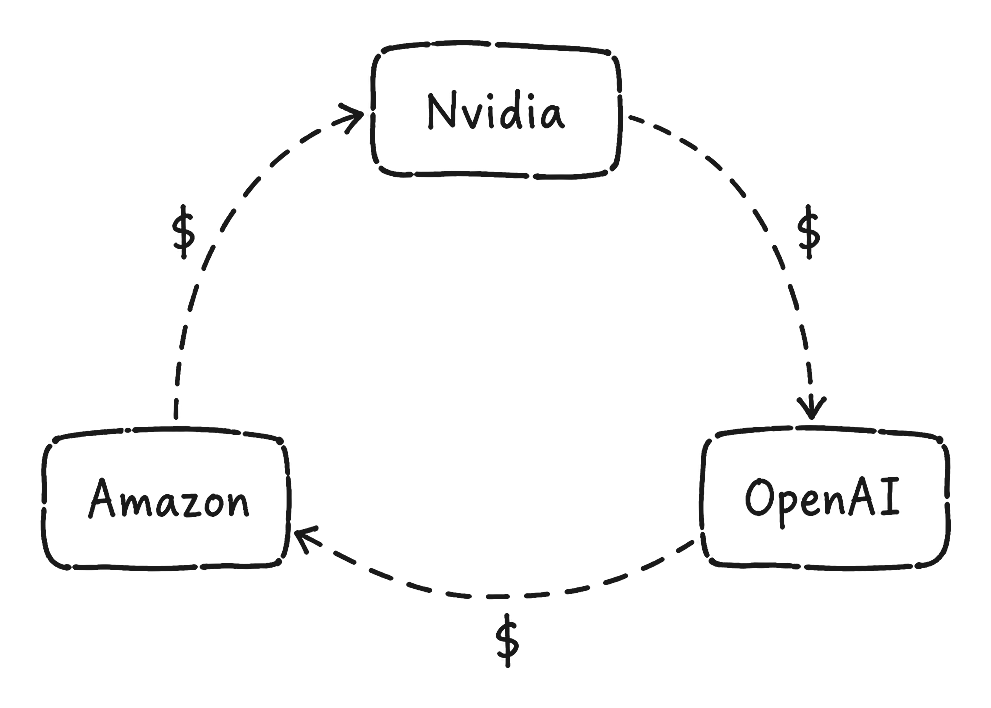
Who’s paying for all this
One of them is losing money fast, and the other is barely making any. OpenAI reportedly lost about $12 billion in a single quarter this year, and its own plan has it burning around $278 billion of cash between now and 2030. To get there, its forecast has revenue growing almost ten times, from about $36 billion this year to around $350 billion. Anthropic reportedly made its first operating profit in the spring quarter, on an adjusted basis. It had projected about $559 million, which is small next to what both have spent getting here.
Meanwhile, companies are burning through their AI budgets in months. Uber gave Claude Code to its engineers and used up its 2026 AI coding budget by mid-April. In May, Uber’s COO said the spending was getting harder to justify.
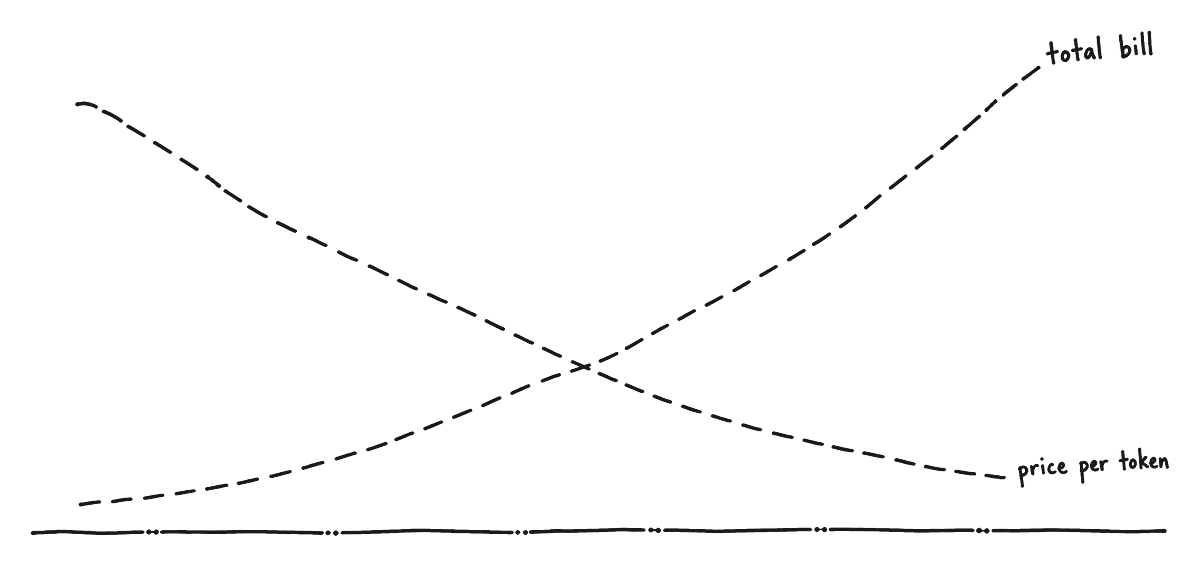
The average price paid per token has dropped since spring, but I don’t think AI gets cheaper. People use it for more and more things, agents burn through way more tokens than a chat (Anthropic measured about four times as many), and if we get to AGI it’ll be doing basically everything. So the total bill keeps going up. The labs are stuck: if they don’t charge more, they don’t make money, and if they do, people switch to something cheaper.
And the cheaper thing is already good enough for a lot of work. Pinterest built its shopping assistant on Qwen, an open model from Alibaba, trained it on its own data, and says it came out about 90% cheaper and around 30% more accurate. Uber cut its cost per session roughly in half by tuning how its agents work, like caching and handing small sub-tasks to cheaper models. Eisman says AI models have no moat, and I think he’s right. If a better or cheaper one shows up tomorrow, nothing keeps you.
What I didn’t expect is that the two Big Short guys disagree. Michael Burry says big tech now spreads the cost of its chips over five or six years instead of three or four, which makes each year’s profit look bigger, by about $176 billion between 2026 and 2028. Eisman calls that too academic, because there’s still huge demand for older chips. Even the companies can’t agree: Amazon shortened the life of some servers, Meta made its longer. And some data centers are built by private investment firms like Blue Owl and leased to big tech, so the debt never shows up on big tech’s books.
Then there’s power
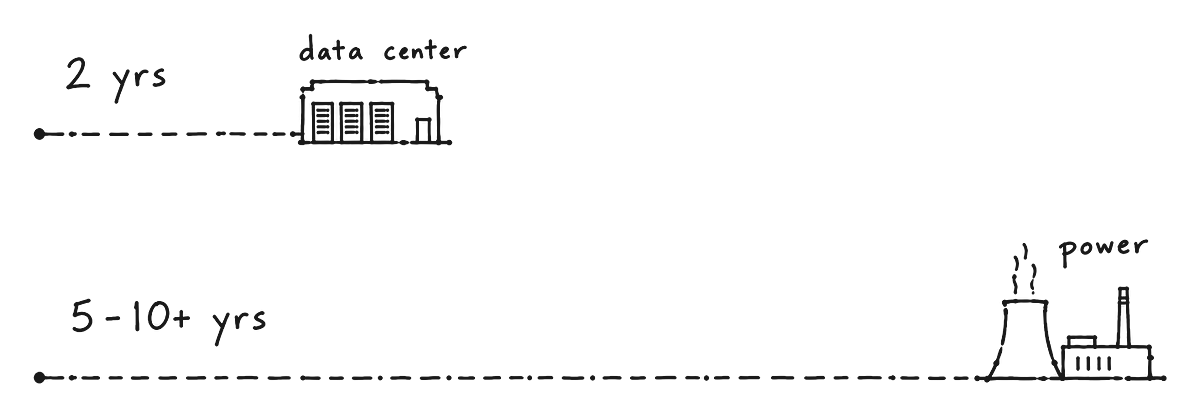
Then there’s power, which I think matters most. Whatever powers a data center takes longer to build than the data center. The building takes about two years. The last nuclear plant built in the US took over ten. So more and more new data centers are turning to gas turbines, often built right on site. But three companies make most of the big ones, and GE Vernova is sold out through 2028, close to sold out through 2030, and already selling slots for 2031. A power plant on the grid also needs a connection, and that queue takes over five years on average. You can always find more money, but you can’t print a power plant.
Regular people are already paying for it. On the biggest US power grid, which covers 13 states, the price of guaranteeing enough power went up about nine times in one auction. In December 2025 it fell short of its reliability target for the first time, with data centers driving nearly all the new demand. In Maryland, those costs alone added roughly $10 to $21 a month to household bills, depending on the utility.
The labs are also trying to own more than the model. OpenAI is reportedly building its own GitHub, which is funny, because Microsoft owns GitHub and about a quarter of OpenAI. It’s bought more than ten companies this year and is making a device with Jony Ive. Anthropic bought Bun, a tool a lot of developers build on. Owning the whole ecosystem gives them more to make money from, and I think that could shake things up a bit.
If the labs can’t keep their promises and prices go up a lot, companies might hire people back. Klarna already brought some humans back in customer service, even though AI is still the top reason companies gave for US layoffs this year (about a fifth). If running AI for a job costs more than the person who used to do it, it’s just not worth it.
So, is it a bubble?
So is it a bubble? I wouldn’t call it that, exactly. I do think something will burst, and it’ll hurt some people, but AI isn’t going anywhere. I don’t think it’ll be one big crash we all feel. More likely it’s slow, with the little startups dying out one by one while the big players stay. For me personally, nothing has changed so far.
A crash also isn’t bad for everyone. I traded for two years, and you can make money on the way down too if you read it right. Burry made a fortune betting against housing before 2008, and this year he’s reportedly been betting against Nvidia and other AI stocks. That’s not advice though. He placed the housing bet years early, and his own investors tried to pull their money out before he was proven right.
If you want to watch this yourself, the OpenRouter rankings show how many tokens go through OpenRouter each week, and Google shares its token counts on earnings calls and at its I/O conference. Usage is still growing fast while the price per token is falling. If usage flattens too, that would tell you a lot.
explain this like I’m busy
The money goes in a circle and leans on two companies. Budgets burn fast, cheap models are good enough, and power can’t be built as fast as money can be promised. Something bursts, slowly. AI stays.
Thanks for reading,