Prague is building the plumbing for AI agents
TL;DR
- E2B, started by two Czechs, gives AI agents a throwaway computer. Its customers have launched 2 billion of them.
- The founders spent years on developer tools that didn’t take off, then switched to sandboxes in 2023.
- Its Croatian-founded rival Daytona was just valued at $1B. Same product, different engineering choices.
The number that caught my eye last week came from a company that doesn’t build AI agents at all. It rents out the place where they work.
E2B, started by two Czech high-school friends and run from San Francisco and Prague, said its customers had launched two billion sandboxes (small throwaway computers where an agent runs its code). By its own count the first billion took about three years, the second about five months. Then on 20 October, Daytona, a company with Croatian founders that does something very similar, raised $60M at a $1B valuation.
Selling shovels in 1848
The story goes that in 1848, Samuel Brannan bought up all the picks, shovels and pans he could find. Then he ran through the streets of San Francisco shouting that gold had been found on the American River.
Between 1 May and 10 July 1848 his store at Sutter’s Fort took in about $36,000 in gold, and by 1849 it was reportedly selling $150,000 of goods a month. He became known as California’s first millionaire, and he got rich without mining.
That’s the classic way to explain infrastructure: in a gold rush, sell shovels. (People like to credit the line to Mark Twain, but Quote Investigator found no evidence he ever said it.)
The agent boom has its own shovels. Agents need a safe place to run code, a way into real business processes, and someone to check what they write. E2B sells the most basic one, the place to run the code.
What a sandbox is
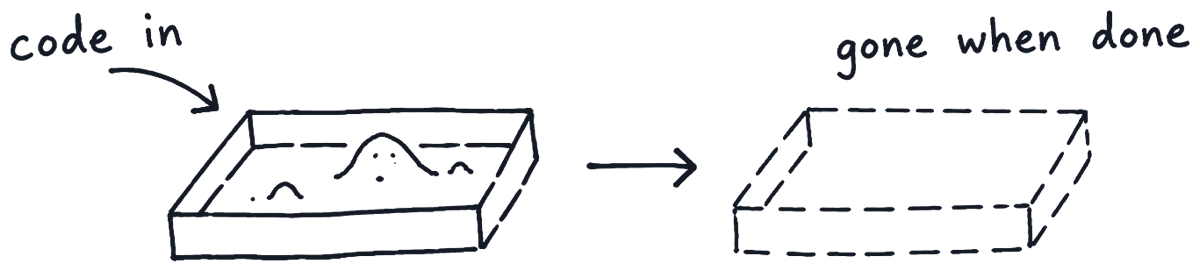
Sandbox is a good name for it. Think of a kids’ sandpit: the agent can dig, build and break things, and none of it spills into the rest of the garden. When the task ends, the sand gets swept clean.
Technically, it’s a small, isolated computer that an agent starts when it needs to run code and shuts down (or pauses) when the job is done. When a model writes a script or works through a spreadsheet, you don’t want that code running on your company’s own servers.
E2B co-founder Václav Mlejnský told Lupa in January that the company is building a “new AWS” and wants to be the standard for how sandboxes are started and used. He also expects agent traffic to speed up fast. When Lupa reported the two billion, it added that AI agents already make more traffic than people. The number behind that is Cloudflare’s: in June 2026 about 57% of requests for web pages on its network were automated, and that counts every kind of bot, not just agents. So that’s Brannan shouting in the street again: the company selling the infrastructure is also the one announcing the rush.
How E2B started
Václav “Vašek” Mlejnský and Tomáš Valenta met in high school, where they made iPhone games together. Both went on to university (Mlejnský to Charles University’s Faculty of Mathematics and Physics), and both left without finishing to build a company.
The first years were hard. According to Forbes Česko, they built several developer tools, none of them took off, and sales covered only a few months of rent. Winning a Pioneer startup contest took them to Silicon Valley, and in 2020 they set up the US company FoundryLabs Inc., which E2B still runs under.
The turn came in early 2023. Burned out, they took a break to play with GPT-3.5 and built an AI agent that wrote code and ran it. A demo of it went viral, and OpenAI co-founder Greg Brockman reshared it. Mlejnský later told SiliconANGLE that building the agent showed them the real problem: cloud infrastructure was designed for humans, not for agents. So they stopped building the agent and started building the place where agents could run code safely.
I think that’s why they spotted it early. Both founders had spent years making tools for developers, and an agent is a new kind of developer that nobody had built tools for yet.
After that it went fast. In September 2023 Kaya VC led a pre-seed of about $2.5M. In spring 2024 E2B released its open-source Code Interpreter SDK, and by October 2024 sandboxes had been started about 7 million times. That month Decibel led an $11.5M seed round.
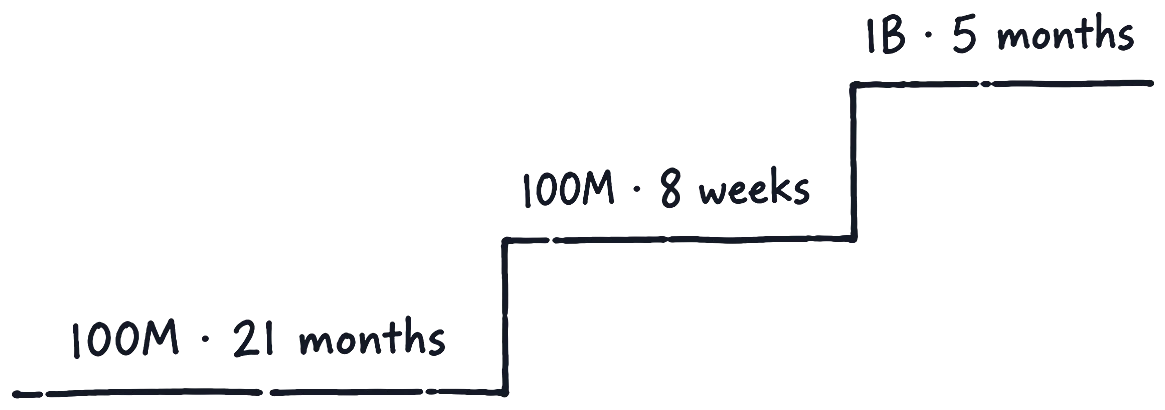
In July 2025 Insight Partners led a $21M Series A, and the company said 88% of the Fortune 100 had signed up. Around then it passed 200 million sandboxes. Mlejnský posted that the first 100 million took 21 months and the next 100 million took eight weeks. E2B was about 15 people, and Mlejnský told Forbes Česko its annual recurring revenue was in the higher millions of dollars. The first billion came in June 2026, and the second this October.
Customers pay for the seconds their sandboxes run. Mlejnský told Forbes Česko in 2025 that sandboxes for agents are a “99 percent blue ocean” market, meaning almost nobody was competing in it yet. A year later, that ocean has at least one well-funded rival.
E2B and Daytona
Daytona was started in 2023 by Ivan Burazin, Goran Draganić and Vedran Jukić, Croatian developers. Burazin had earlier co-founded Codeanywhere. In January 2025 Daytona switched from developer environments to agent infrastructure, the same move E2B had made two years before. It says its revenue run rate grew 25-fold between January and September 2026 (it doesn’t give the starting figure), and Fortune lists Anthropic, OpenAI, Nvidia, Cursor and Cognition among its users.
Daytona nearly didn’t make it either. Burazin told Fortune that when Daytona pivoted, it “basically gave our competitors all our customers” and had about three months of revenue left in the bank. Investors kept asking why the product was needed at all if “AWS can do this thing.” According to The Recursive, its core engineering team of about 20 still works from Split and Zagreb, and Daytona is Croatia’s third unicorn after Infobip and Rimac.
On paper they sell the same thing, a throwaway computer for an agent. Under the hood they differ in three ways.
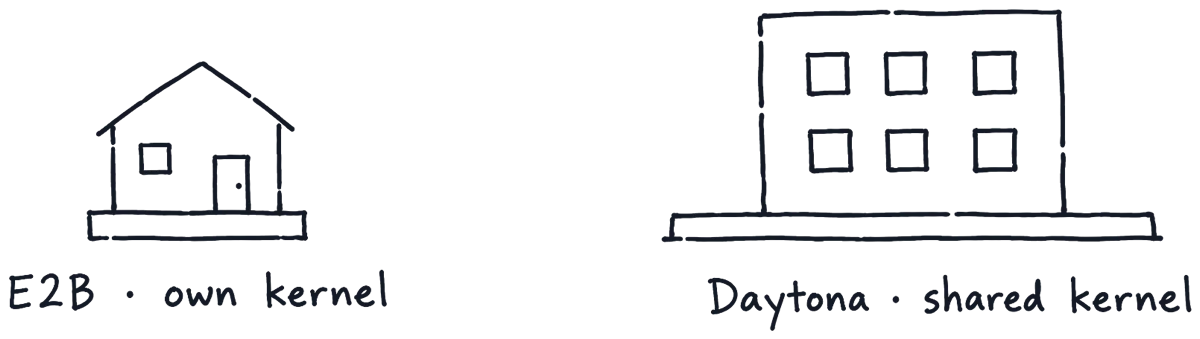
The first is how the sandpit is walled off. Each E2B sandbox is a Firecracker microVM with its own operating-system kernel, the same technology behind AWS Lambda. Daytona’s default sandboxes are containers, which share the host machine’s kernel (full virtual machines are an option). It’s the difference between a detached house with its own foundations and a flat in a block where everyone shares them. The house is harder to break into from next door, and the flat is quicker to move into. Daytona advertises under 90 ms to start a container sandbox, and E2B’s older docs put its own at about 150 ms. Both are the companies’ own numbers, measured in different ways.
The second is what you can do inside. Daytona leans on extras: GPU sandboxes, computer use, and on its VM sandboxes, snapshots and forks of a running machine. “You can literally replicate the computer into two and try both outcomes,” Burazin told Fortune. E2B also has a desktop sandbox for computer use, and on its paid Pro plan a session can run for up to 24 hours.
The third is how open the code is. E2B’s is open source under Apache 2.0, so anyone can use and change it, commercially too, without publishing their changes. Daytona’s was most recently AGPL 3.0, which makes anyone offering a modified version as a service share their changes with its users. In June 2026 Daytona moved its core development into a private codebase. The old code is still public and can be forked, along with its SDKs and CLI, but it’s no longer maintained. Of the two, only E2B still builds its sandbox in the open.
The pitches differ too. Mlejnský talks about a “new AWS”, and E2B says it wants its open sandbox protocol to become the standard. Burazin talks about an “agent cloud” and expects a CPU crunch as agents multiply. “The inference clouds is where the agent thinks, and our cloud is where the agent works,” he told Fortune.
When I put the two announcements next to each other, one thing didn’t line up. E2B reports how many sandboxes got started, Daytona reports how fast its revenue grew from a number it doesn’t share. It’s like comparing how many shovels left the shop with how much money went into the till. Neither gives you numbers you could put side by side.
The rest of Prague
E2B isn’t alone. The same week, Duvo, Tomáš Čupr’s startup that runs back offices with agents, raised a $32M Series A. And Aisle, Ondřej Vlček’s AI security startup, signed a letter of intent to be bought by Cohere, which plans to make the Prague office its AI security hub. None of the three is in the business of training frontier models. Looking at who founded them, each one grew out of something Prague already had.
Aisle’s founders come out of Avast, which trained a generation of Prague engineers in low-level, adversarial software. Vlček ran it as CEO, his co-founder Jaya Baloo was its security chief, and Aisle is that tradition pointed at AI. Duvo’s co-founders come from Rohlik, a grocery business where a broken process costs money every hour, and now they’re automating the kind of work they used to run. Mlejnský went to Charles University’s maths and physics faculty (and left without a degree), the same school that feeds Prague’s AI research scene.
The gaps are just as easy to see. Credo Ventures, a Prague fund, has backed Duvo since its seed round, but the big rounds were led by Index Ventures and London’s Balderton. Sales and leadership move to the US too, and this month’s exit, if it closes, sends a Prague team into a Canadian company. Czechia also has no gigafactory-scale AI compute yet. A bid for one at Jíloviště is going into EuroHPC’s gigafactory call this winter, and the winners are due to be picked in early 2027.
Room for both, and the risks
Right now there’s room for both. Demand for agent compute is growing faster than any single provider, and the big labs buy from several suppliers at once. Both name Meta among their customers. E2B also counts Groq and Hugging Face, and Daytona’s include Nvidia, Anthropic and OpenAI.
Three things could change that. The labs could build it themselves, and if sandboxes become a default feature of model platforms, the independent providers lose their best customers. The hyperscalers are circling too, since isolated compute is close to what AWS, Google and Microsoft already sell. And agents may disappoint. In June 2025 Gartner predicted that more than 40% of agentic AI projects will be cancelled by the end of 2027. Every gold rush ends, and when the miners leave, fewer people buy shovels.
What I’ll be watching: whether E2B announces a priced round that answers Daytona’s $1B, whether Duvo’s push into the US works, and whether the Aisle deal closes with the Prague team intact.
For now, Prague sells shovels. How much gold there is, we mostly hear from the people selling them.
Thanks for reading,Sebastian