One dollar changed his life

TL;DR
- Andrea Demurtas, from Sardinia, taught himself to code to list 900 of his dad’s old car parts online, then built StudyGPT, an AI study app with about 3,000 users.
- His study app barely made money, but it proved he could sell software. One message on X got him into HardLaunch, a UGC agency, as a founding content engineer.
- At HardLaunch, a UGC agency for apps, he runs the automation behind thousands of posts a day. His rule: AI multiplies human-made videos, but it never writes the hook.
You’ve seen these videos even if you don’t know the term: someone in their bedroom telling TikTok about an app they just found. That’s UGC, and right now every app is fighting for it. Andrea Demurtas, who spent his teenage summers changing tires in his father’s shop in Sardinia, now builds the machine behind HardLaunch in Bangkok, a UGC agency that posts five to six thousand times a day for its clients. His take on where AI fits in is not what you’d expect.
Full disclosure: Andrea is a friend. We met four years ago on an exchange in Denver, and I was one of the first people to pay for his app.
From the tire shop to Python
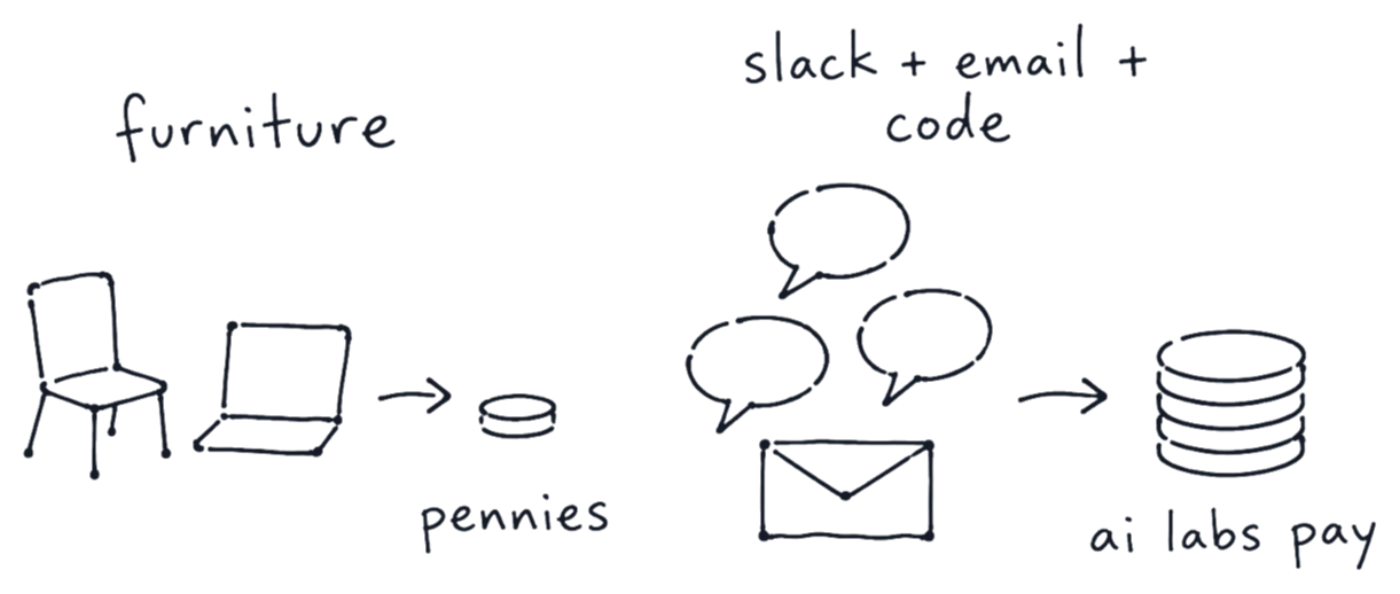
The default path was his father’s car service. “My father would have hoped that I would have followed his steps,” Andrea says. “Right now he’s seeing me on the other side of the planet, doing completely different stuff that he doesn’t necessarily understand. But I definitely think he recognizes the effort.” His way out was a storage room full of old Fiat parts that his dad let him sell for half the money. Andrea hated the shop work, so he built an online store around twelve-hour shifts, before eight in the morning and after eight at night.
Forty parts made him around a thousand euros, and the room held about a thousand. So in 2025 he taught himself Python with YouTube, GitHub Copilot, Cursor and ChatGPT as a teacher, and wrote a scraper that pulled in photos and specs for every part. The new site made €200 on day one, ran up €300 in marketplace fees, and every order still had to be packed and shipped. “Imagine if I could do the same thing, but without all that hassle,” he says. “A digital product. I just make it once and then I sell it infinitely.”
A tutor that remembers
The idea came during exam season. He was studying with ChatGPT and had to explain, every single session, how far he’d got and what he still didn’t know. “I was just pissed off at this specific problem,” he says. So he built StudyGPT, a study app that keeps track of where you are.
He didn’t train a model. He plugged in existing ones and fed them a running summary of what the student had already covered. To stop the AI from teaching nonsense, it was never the source: students uploaded their own textbooks, PDFs and slides, and the AI turned them into a plan. He started building in late June 2025 and shipped in late July, with no full-stack experience. “The product was terrible,” he admits. “The idea was there.”
Ask him what it takes to build like that today and he says the code is no longer the hard part.
“…it’s more about deciding what to build rather than knowing how to build it. Because AI solved the knowledge part, you just need to know and have that judgment on what to build instead.”
The most important dollar
Before launch he had about 20 signups, mostly people who typed “StudyGPT” into a search engine and landed on his page. The plan was a seven-day free trial that cost one dollar to activate. On launch day he emailed all 20. One of them paid.
He’d made far more selling car parts. It didn’t matter. He opened Stripe, saw the one-dollar charge and thought: this can actually be real.
It was the digital product he’d pictured while packing car parts: no box, no courier, no storage room. Just an idea, a month of work and a stranger’s card. “This purchase came entirely from my thoughts, my effort, my idea, put together in one month, and someone actually paid for it,” he says. It felt better, he adds, than any money he made later.
“In that moment, I realized if I can make one dollar, I can make any amount of dollars online.”
The rest of the numbers are modest, and he’s upfront about it. By the time he left to join his current company, StudyGPT had about 3,000 users in total, most of them free, and had made roughly a thousand dollars, he estimates. He calls it his testing ground.
I wanted to know how he stopped free users from burning his API budget. Turns out it never really happened. He ran cheap models, GPT-4o mini and some open-source ones, and most requests were small. Besides, he wanted usage. Every user was information.
For most of its life StudyGPT sat behind a hard paywall: $9.99 a month at first. That was deliberate. He wanted to measure how well the landing page and onboarding converted. I was one of those early subscribers. Retention was the weak spot. “Users would fall off very quickly,” he says. Later he switched to freemium: you start chatting on the landing page, sign up for more messages and pay $20 a month for the full thing. The week he signed his new contract was StudyGPT’s best week ever. Of course it was.
There’s one more date worth knowing. On 29 July 2025, the same month StudyGPT launched, OpenAI added a free study mode to ChatGPT, open to all logged-in users. For a one-person study app, that’s the nightmare scenario. Andrea shrugs it off.
“I never really took it as, okay, I’m going against ChatGPT,” he says. “If I can get a cut of the market in any way, that’s still huge for me.” He knew any ChatGPT release could crush him on any given day. He was there to learn, ship and talk to users. The study mode didn’t change that.
The highest-leverage message ever sent
He told me this part over lunch once, so I ask him to tell it again for the tape. “Now that I think about it, that must have been the highest-leverage message ever sent in history,” he says, and laughs.
While building StudyGPT he was trying, as he puts it, to play with the big dogs: following indie developers and startup founders on X. One of them was Matt Gittleson, who was then running UGC at Jenni AI, an AI writing and research tool for students. Same market as StudyGPT. Andrea remembers a post where Gittleson showed a churn rate (the share of paying users who cancel each month) of six percent. “I was like, how does this guy have such low churn?”
A few weeks later Gittleson posted that he was hiring for a new company. He needed someone technical who also understood UGC and marketing. The post had about ten thousand views. Andrea sent a message anyway. “I didn’t have any expectations,” he says. “But you kind of have that feeling that something is searching for you.”
It worked. “I was really the right guy at the right time,” he says. He joined HardLaunch as a founding content engineer, which in practice means he owns the technical side: the internal tools that run the agency and the automated content it delivers to clients.

What HardLaunch actually sells
UGC means user-generated content: a normal-looking person talking about an app as if they just found it. It works because it doesn’t look like an ad. Andrea talks about it the way most people in tech talk about AI. “UGC is the main marketing media right now,” he says. “And we are one of the best agencies in the world at doing that.”
Most apps hire creators themselves. HardLaunch, legally UGC AI, Inc., runs the whole thing for them. According to its website, the agency picks the creators (“we accept the top few percent”), trains them on the product, coaches each one weekly, reviews every draft before it’s posted and seeds the comments. Programs go live within two and a half weeks on TikTok, Instagram, YouTube Shorts and Facebook Reels. Client names are confidential.
On top of the creators sits the part Andrea builds: an add-on of 200 automated accounts per client, running on HardLaunch’s own software, which the site says adds about 18,000 posts a month. His numbers fit. Across about ten clients on automation, he says, the systems run around two thousand accounts and post five to six thousand times a day, roughly 550 per client. “Everything is custom,” he says. “I wouldn’t be able to post six thousand times a day by myself.” The other half of his job is the internal tooling that keeps hundreds of creators and dozens of coaches in sync.
The product has shifted fast. When Gittleson took HardLaunch out of stealth on 10 June 2026, he pitched it on X as a way for startups to auto-create social media accounts and post unlimited content at zero cost per post. By August, his pinned post promised to turn one video into twenty, with localisation into other languages. Today’s homepage leads with the creators.
And how is it doing? The claims are big, and they are the company’s own. The website lists 2.5 billion views in the past six months and six million users acquired organically. One unnamed AI app got 1.1 billion views in under six months, a study-timer app 350,000 extra downloads in four weeks. On LinkedIn, Gittleson wrote that HardLaunch left stealth at over $3M in annual recurring revenue, fully bootstrapped. The founders say they previously took Jenni AI to $1M in monthly revenue. HardLaunch doesn’t publish prices. A ranking put out by a rival agency lists its retainers from $30,000 a month. Andrea calls it one of the largest UGC agencies in the world, and says all of the growth came from word of mouth.
Why the human still wins
Once he sent me a video of his screen: one creator’s clip, and next to it the same clip with other faces. I couldn’t tell which one was the original. I still think about that.
The interesting part is why it looks real. His answer is almost boring: the source is a real person.
“You can tell it’s AI just because it’s pretty average. It looks like the average of the data that it was trained on.”
Generate a video from a prompt, he explains, and you get a plausible blend of everything the model has seen. Start from a real creator’s video and use AI only to transform it, by swapping faces or adding overlays, and you keep the originality and the nuance. HardLaunch’s thesis is to “amplify the human side”: take what already works and distribute more of it. The human-made content, he says, still performs best.
Where does that leave the rest of us? “In a world where everything can be made perfect with AI,” he says, “I think humans will always go after the originality and the imperfections of humans.”
There’s a question I didn’t ask on tape, and you’re probably asking it now: do the people watching know? HardLaunch works mostly for the American market, where the closest rule is the FTC’s ban on fake reviews and testimonials. Since October 2024 it has covered testimonials from people who don’t exist, AI-generated ones included, with civil penalties of over $50,000 per violation. TikTok itself requires a label on realistic video that is AI-generated or significantly edited with AI. Europe’s AI Act, whose deepfake labels have applied since 2 August 2026, would only come into play for videos shown to EU audiences.
The team behind all of this is small and moves fast. Andrea says HardLaunch cares about one thing: the work gets done, and done well. “No one is doing performative work. Everyone is doing actual work,” he says. Coming from years of building alone, that was the biggest change. Your standards, he says, get set by the people around you. “Working at HardLaunch, I had my hardest work and my best work.”
One terminal, no ghostwriter
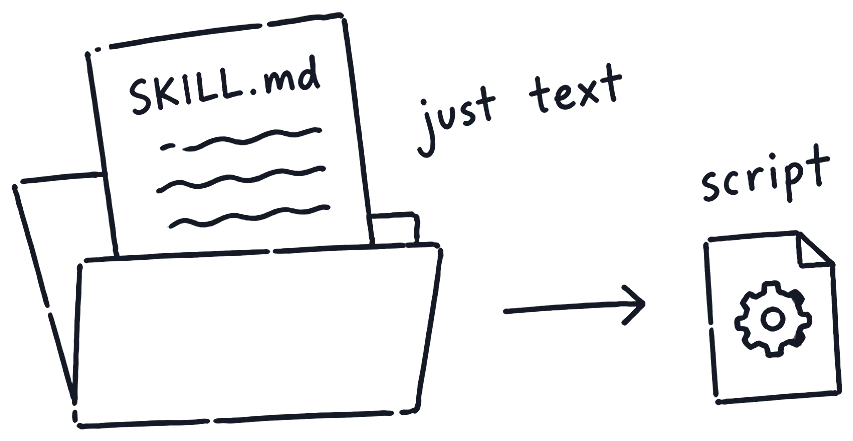
I expected a wall of tools. I got one. “I’m actually pretty simple in that sense,” he says. “I’m a Claude Code terminal guy.” Every task gets its own Claude Code session so the context stays with the work, and he has built a set of skills for problems that keep coming back in the business.
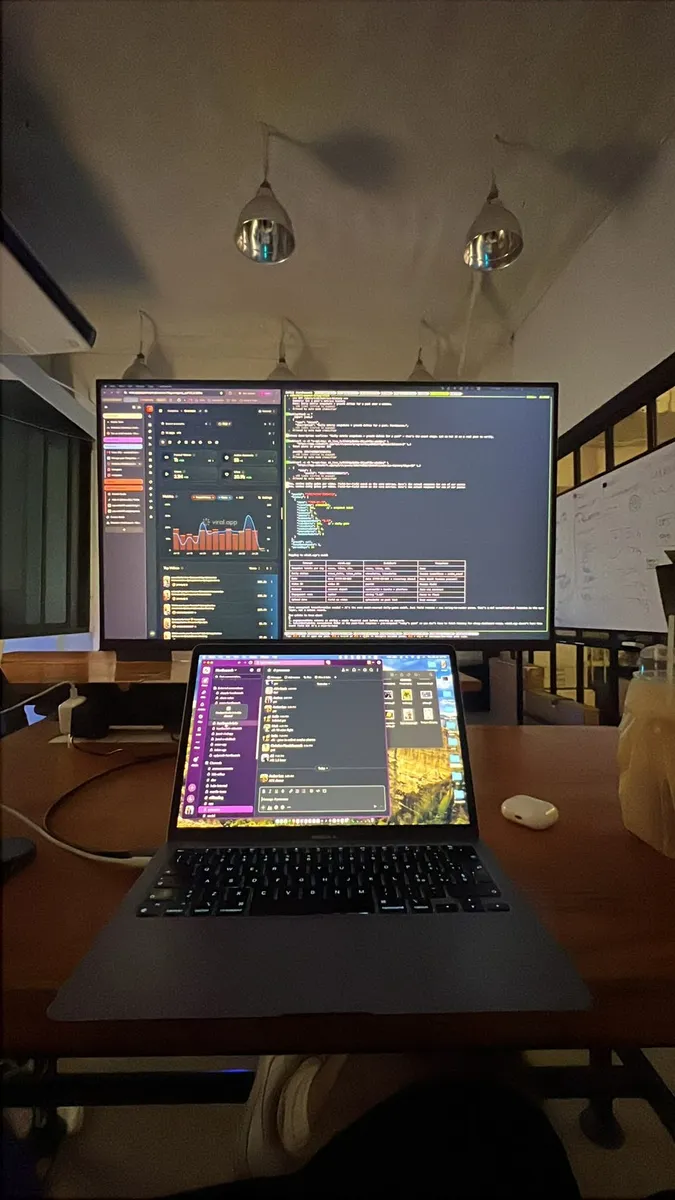

He has used Codex too, and likes it more for writing documents. For code, problem-solving and even creative work, he defaults to Claude Code. He admits it’s partly habit: “I probably should spend more time trying things out.”
Then the question I care about most: what does he never let AI do? He has two answers. The first is copy. Hooks and any text that goes out. “There hasn’t been one time where pure AI generation hasn’t let me down,” he says. He writes the base himself or takes it from creators, and lets AI rephrase it.
“I never let AI write from scratch in terms of copy. And I also don’t let AI decide workflows.”
The second is structure. He designs the workflows, AI implements them, and he keeps his eyes on them. It’s the same idea as the videos: the original comes from a person, AI makes more of it.
The stack
- Claude Code in the terminal: almost everything, one session per task, plus his own skills for recurring jobs.
- Codex: occasionally, for writing documents.
- AI video models, direct from providers, Seedance among them: turning human-made source videos into new versions at scale.
- Back in the StudyGPT days: GPT-4o mini and open-source models for cheap requests, GitHub Copilot and Cursor for coding, ChatGPT as a tutor.
Cold calling was brutal
Last question. What would he tell a nineteen-year-old in Sardinia who wants to follow his path? “I don’t really know many nineteen-year-olds in Sardinia that want to follow my path,” he says. Fair. So, him at nineteen.
The biggest unlock, he says, was figuring out what he actually enjoys. The websites for his dad, the car parts, the cold emails were all experiments to find it. Cold calling was the counterexample. “It was brutal. I never felt any reward from it.” Building was the opposite. “I can spend twenty hours in front of my laptop every day, just building stuff, and I’ll be fine.”
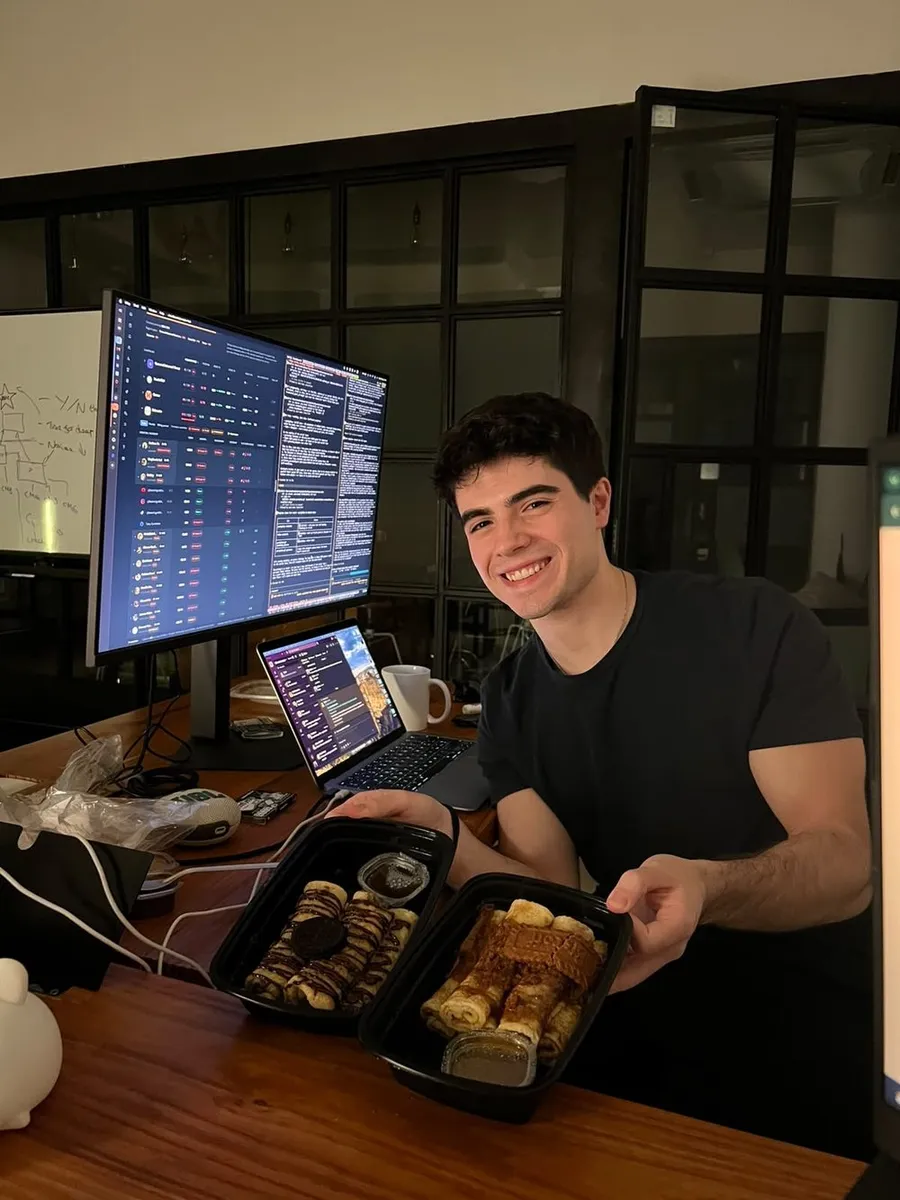
There are tough days, he admits, and that’s where discipline comes in. But the reason he can work the hours he works is simple. “I think that’s the highest hack you can ever have in life: just do what you love.” Is he the hardest worker at HardLaunch, then? No, he says. That’s Matt.
That’s the thread through all of it. The car parts, the study app and now the agency started the same way: he built something because he enjoyed building it, then found out someone would pay for it. HardLaunch is the same thing at a much bigger scale.
The machine posts six thousand times a day. The first line is still his.
Thanks for reading,