Tenex pays its engineers for output, not hours
TL;DR
- Tenex is a New York AI firm started in spring 2025 by Morning Brew co-founder Alex Lieberman and engineer Arman Hezarkhani. It has 75 people and no investors.
- Its engineers aren’t paid by the hour. They earn per story point, a unit of finished work, so working faster with AI means earning more, not less.
- It works so far. Nobody has solved yet how to pay for work that doesn’t fit into a ticket, or what a point is worth once AI doubles everyone’s output.
Tenex launched in New York in spring 2025. A year and a half later it has 75 people, works with Fortune 2000 companies and has never taken money from investors. According to the founders, they booked $1 million of work in the first week after announcing it. I went looking for how a company grows this fast, and the story of Alex Lieberman and Arman Hezarkhani is one I can call inspiring. Most of it comes back to one decision: how they pay their engineers.
Two founders and a 90% cut
Lieberman co-founded Morning Brew, the business newsletter that started in college. In 2020 Insider, the company behind Business Insider, bought a majority stake in it at a valuation of about $75 million. Hezarkhani studied engineering at Carnegie Mellon, taught computer science there, did two internships at Google and started several companies of his own.
Tenex started in one of them. Arman’s previous startup, Parthean, built AI tools for personal finance, and at some point he had to cut its engineering team by 90%. With the few people who were left, he rebuilt the way they worked around AI, and according to the founders, the production-ready software they shipped went up ten times. Lieberman had invested in Parthean and didn’t believe the number at first. Arman had to walk him through why AI hits engineering especially hard. Once he believed it, the two of them started Tenex to do the same for other companies.
Faster, and paid less
Their first hire was CJ Hess, an engineer who had run his own consulting business and billed by the hour. AI made his work better and faster, and because he was paid for his time, he ended up earning less for it. Then he saw Lieberman’s post on X about rewarding engineers for their output instead of their time, and he joined. Today he’s Tenex’s special projects lead.
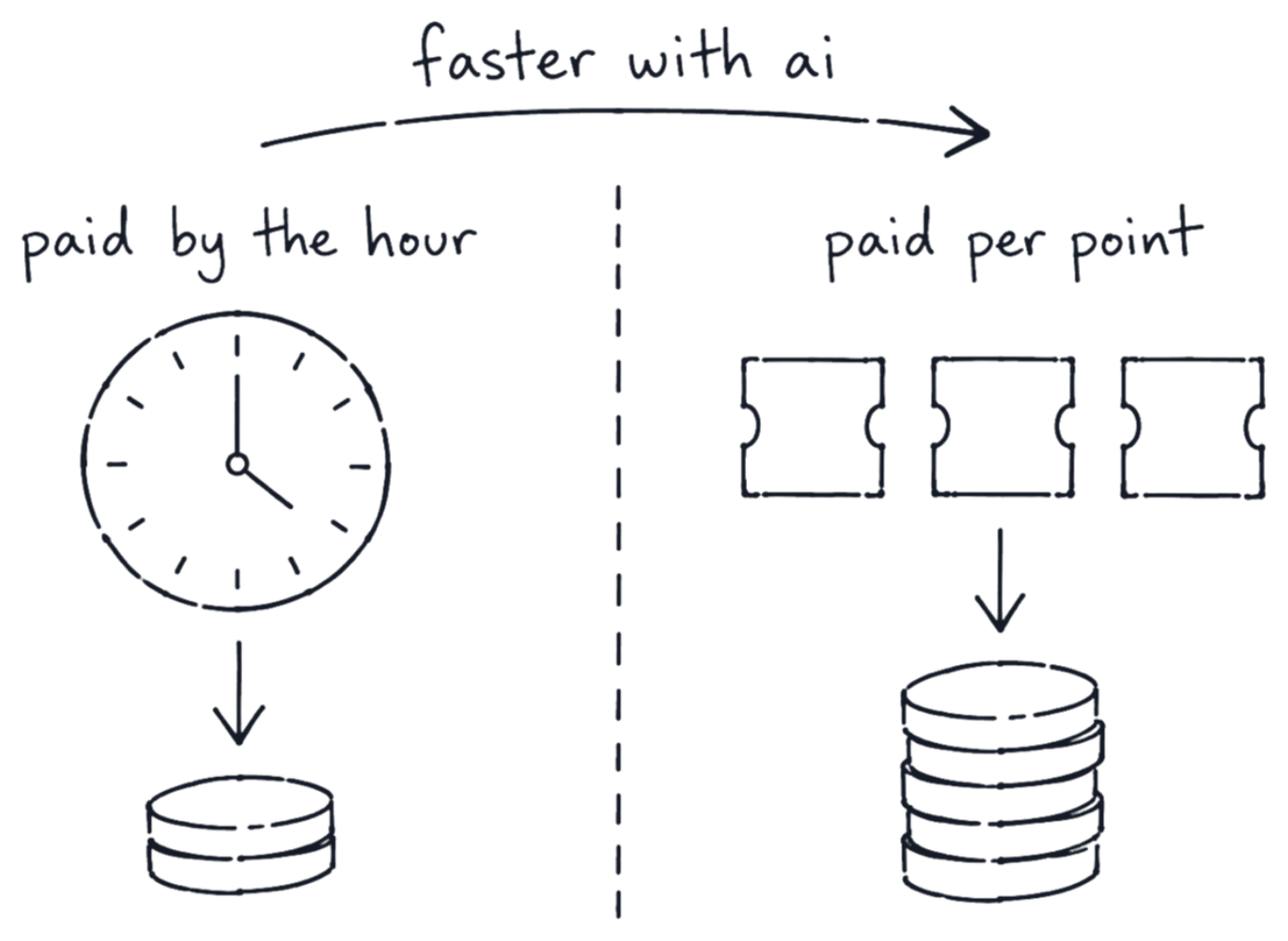
I think a lot of us know this, am I wrong? A task that used to take a whole working day, hours of writing code or going through sources by hand, now takes a fraction of that. The work is the same or better, but if you’re paid by the hour, you just earn less. So why would you use AI to its full potential?
Story points
Tenex’s answer is story points. Software teams have used them for years to estimate how big a task is, and Tenex turned them into money. Arman put it simply on X: clients pay for story points delivered, engineers get paid for story points completed. He says he pays engineers like salespeople.
In November 2025, on the Latent Space podcast, the founders said they expected more than one Tenex engineer to make a million dollars in cash the next year. Sounds good, right? When the team came back on the show a year later, they said their best-paid engineer earns around four times what the lowest-paid one does.
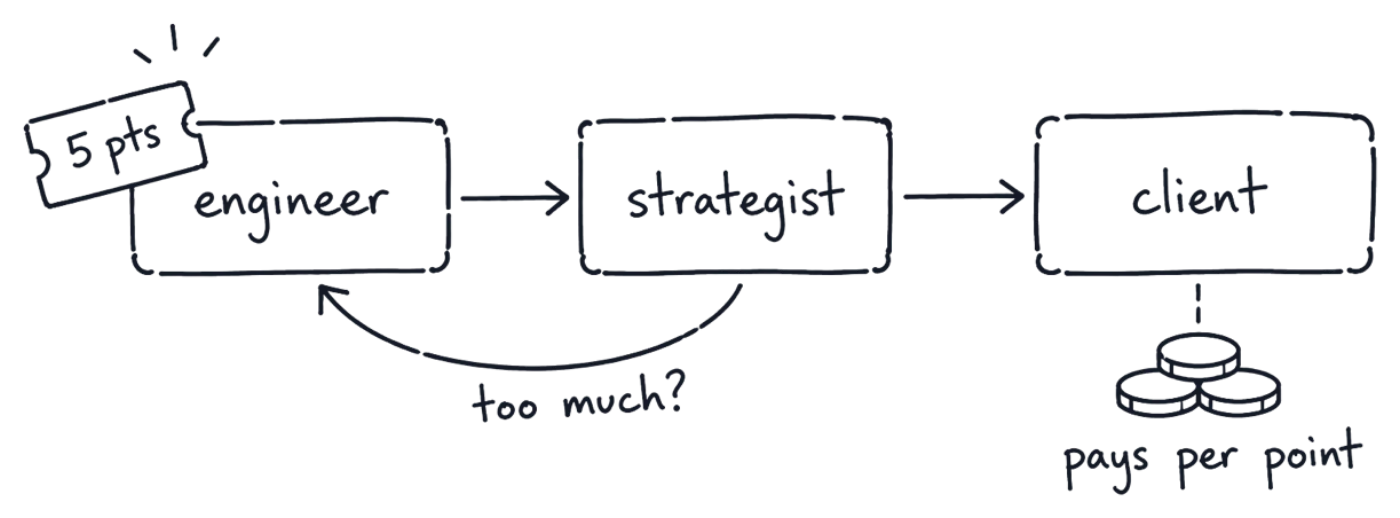
A lot of it you can’t see from the outside, though. How much is one point worth in dollars? Who decides how many points a task gets, and based on what: time, difficulty, tokens burned? From what the team has said, the engineers break each job into tickets and score them in points, and the plan gets approved by the AI strategists, Tenex’s consultants who run the relationship with the client, and by the client. Tenex reviews how it scores points at least once a quarter. The actual numbers aren’t public. I can already imagine the arguments in the office about how developer 1’s task was clearly harder and developer 2 still got paid more.
The obvious worry is that people pad their estimates or ship bad code to collect more points. Tenex has two checks against that. It hires engineers it calls “long-term selfish”, who understand that inflated points would cost them the client. And the strategists are paid on whether the client stays and grows, so they have every reason to push back on a padded estimate. Lieberman says gaming the points hasn’t been the biggest problem so far.
The bigger one is work that doesn’t fit into a ticket: architecture, client meetings, figuring out what to build in the first place. The team calls paying for that the hardest part, and I don’t see an easy answer either.
All without investors
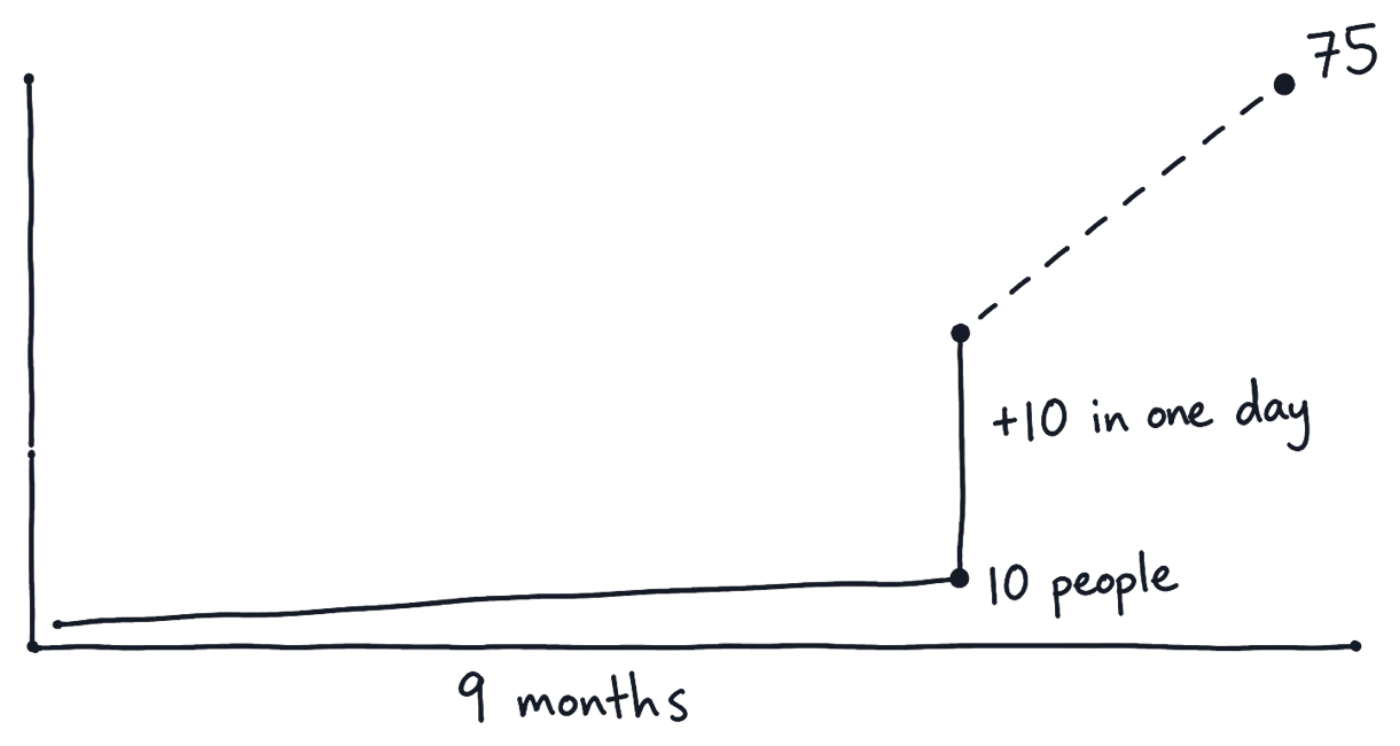
In August 2026 Lieberman wrote that it took Tenex nine months to reach a team of 10, and that they had just welcomed 10 new people in a single day. Now they’re at 75, and 90% of them are engineers or AI strategists. He calls the company “100% bootstrapped” and says it’s been profitable since day one.
The pay model is also how they hire. In January Lieberman wrote that they can get top engineers without venture money because they offer unlimited upside based on the story points an engineer completes. So the same model that pays the engineers is also what brings them in.
The rest comes from how they sell. For the first year Tenex only signed contracts of 12 months or longer, so the money kept coming in. And they don’t do outbound sales at all: in January Lieberman said about 90% of their pipeline came from his own posts on X and LinkedIn.
How much Tenex actually makes, I couldn’t find. When Lieberman posted his revenue goal for 2026, he redacted the number. If you google “Tenex revenue”, Google’s AI answer gives you $43 million and a valuation of over $1 billion, but those numbers belong to TENEX.AI, a cybersecurity company with investors behind it. Same name, different firm.
Writing down the why
To work with AI agents at this scale, Tenex built its own setup called MetaHarness: structured documents in a code repository plus a command-line tool, with every plan, decision and agent log saved in Git. An agent that picks up the work then knows not only what was built, but why. Tenex itself says this much structure is overkill for a small team on a single project.
Do tokens cost more than people?
On the latest Latent Space episode, from October 2026, CJ Hess guessed that Tenex spends somewhere between the same and about twice as much on AI tokens as on its people. Even the host found that high. CJ said costs came down once they switched to Anthropic’s Opus 5.5. CJ also said engineers’ output roughly doubled this year, since the models started handling longer tasks around December.
So if the same engineer now delivers twice as much, should a point be worth less? The host said that in theory it should. CJ only said they keep calibrating and that it’s a tricky equation.
Thanks for reading,