Attendu has an employee that never sleeps
TL;DR
- At Attendu, a Czech-founded event-software company, every change passes a pipeline: one model writes, another cuts the code down, Codex reviews, and Greptile has to give 5 out of 5. Co-founder Marek Mensa says nothing reaches production without it.
- Bob, a Mac mini with its own accounts and a seat in Slack, now writes most of their pull requests, Marek says. Marek reads schemas and names, and watches videos of the rest.
- His advice: build your own Bob on a machine you control. About the future he’s “more excited” than worried.
Every so often a message appeared in Attendu’s Slack saying that Bob had died and was only sleeping.
Bob is a Mac mini whose AI limits had run out, and Marek Mensa, who co-founded the company, calls it the team’s biggest breakthrough lately.
Attendu makes software for organising events: invitations, registration pages, email, check-in.
Marek says it runs thousands of events a year.
He is also a high-level breaker, competing as B-Boy Marrson, and a beatmaker and music maker: his first album came out in 2023.
Breaking, beatmaking and software
I asked how dancing, music and software fit together.
For years he thought they didn’t: he felt he had to choose, and that dancing would pull him away from work.
Then he noticed they fed each other.
He used Attendu’s workflows to make a music album, and from music he took the idea that the best songs aren’t perfect, which stopped him chasing a perfect solution in code.
He thinks the spread pays off more now.
AI handles what’s typical, but if you combine fields that don’t belong together, you get results it wouldn’t produce itself.
“The more fields a person is stretched across, the better.”
A weekend for his dad
Among the things that first pushed him to start something were curiosity about technology and not wanting a part-time job.
He’d always liked bending systems; as a kid he jailbroke a Nintendo with his brother Kristián.
When app stores took off, he and his schoolmate Milan Worsch started making apps, excited by what they could build, and imagined it might one day make money too.
He ended up with two part-time jobs anyway.
Their app for Prague clubs found one buyer for its banner slot, a festival, which paid in two tickets.
It earned nothing, but they had learned to ship an app from the first line of code, and then to build websites, which became freelance work.
I said it reminded me of Andrea Demurtas, whose study app got one paying user, for one dollar (One dollar changed his life).
Marek agreed: “What stays with you is worth much more than the dollar, or fifty dollars. It’s what you learned, and you can keep working with it.”
Around 2015, his dad, who organised events, had queues at the entrance.
A company quoted him barcode scanners, half a year of work and a lot of money.
Marek, still at high school, built two Android apps over a weekend: one made name badges as PDFs with QR codes, the other let hostesses scan them.
There was no queue.
“I’d changed reality with a little app,” he says.
It ran free on his dad’s events for two or three years.
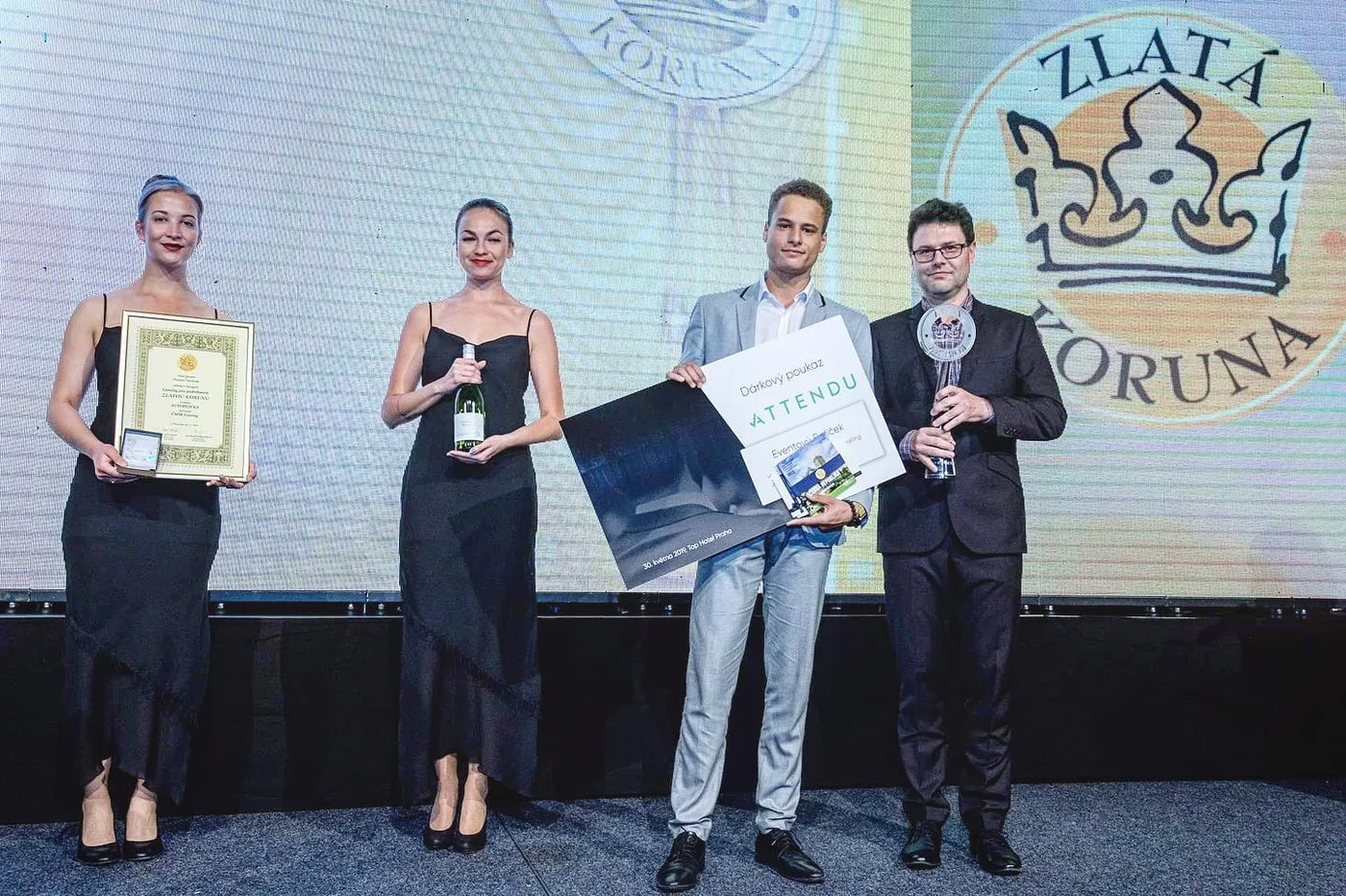
Then Milan saw it at an awards night, and they rebuilt it for iOS and Android as Smart Event.

Once it broke in public: guests printed the HTML of their email because the QR code didn’t show, and invitations went to spam.
It also showed them check-in was the small part.
Forms, branding and email mattered as much, and companies ran them on Excel and Outlook.
They officially founded the company in 2017.
Attendu was rebuilt from scratch three times, and for years it was close to an agency, with the software doing about 20% of the work.
The third generation launched in 2023, built by hand, just before AI arrived.
That’s why, Marek says, adding AI hasn’t produced “AI slop”: the foundations are firm.

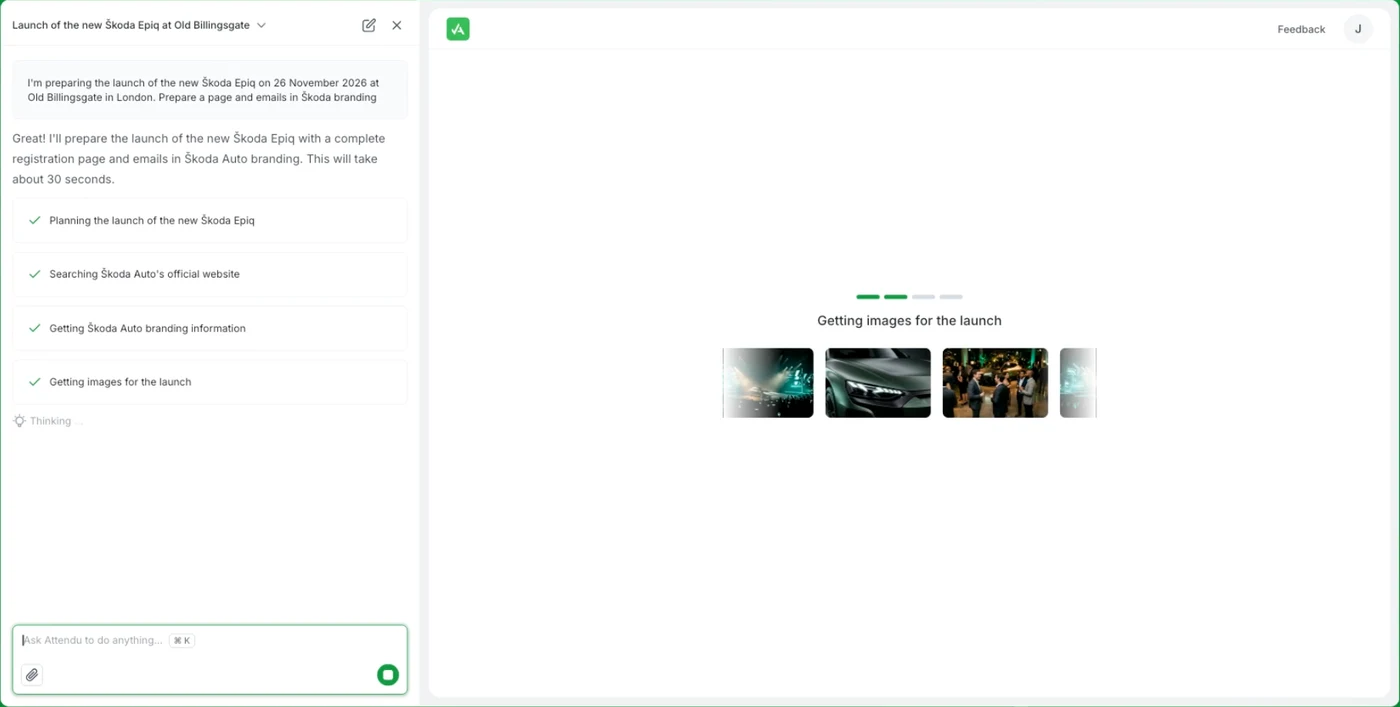
Attendu’s event agent
Attendu’s own AI agent sets up an event from a description and can send emails through chat, and Marek says it was the first event platform to do that end to end.
The team uses it for its own events too: since the start of 2026 Attendu has run Vibe Sessions, meetups for AI enthusiasts in Prague.
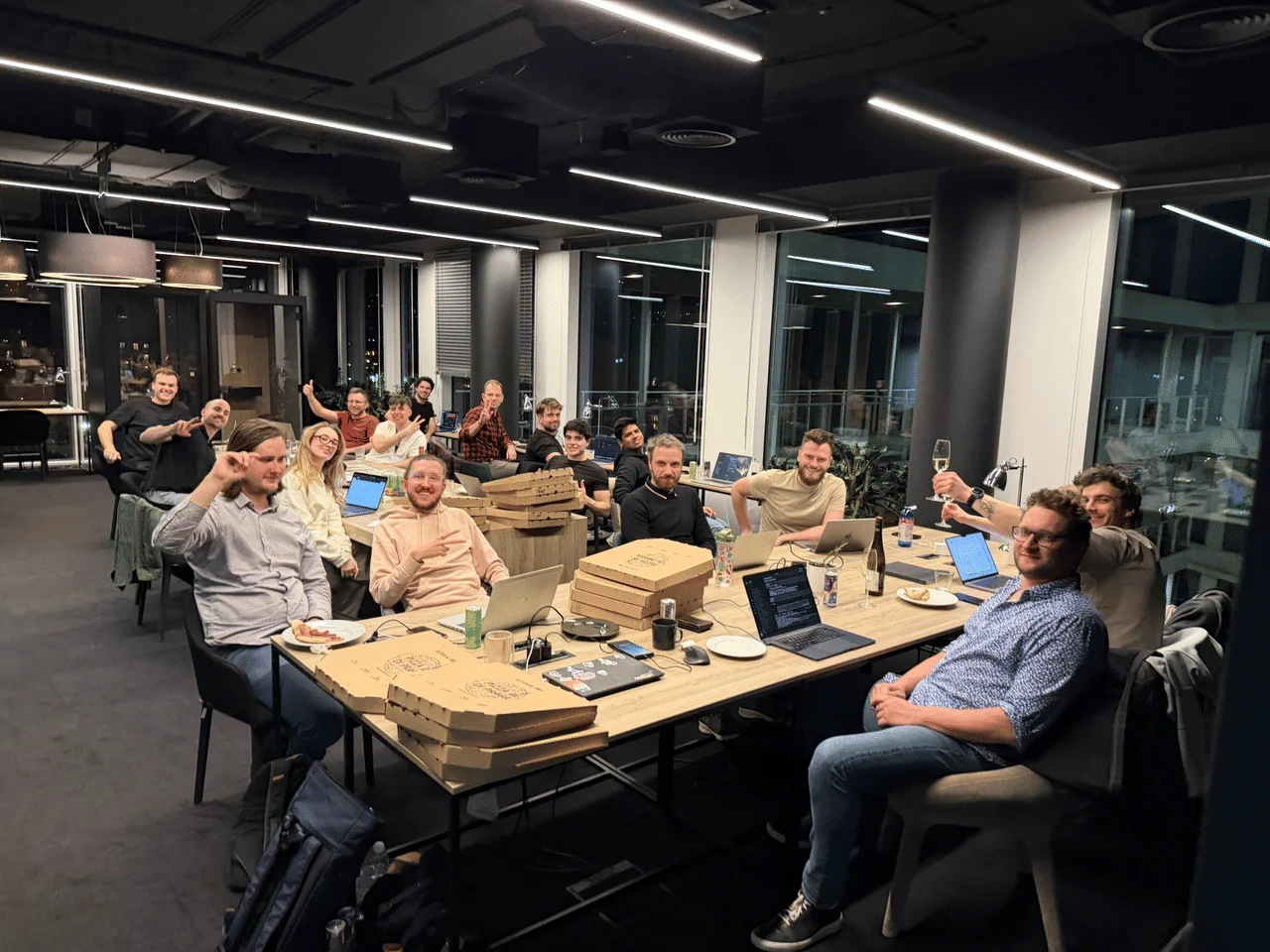
The agent turns each past session into the next one, and the team edits from there.
“Even when a large part of the work is carried out by the AI, the human is still accountable for it.”
Guest lists stay away from models, for security and because 500 guests means megabytes the model would choke on, so the team built other ways of handling data: logs and diagnoses yes, the database no.
for security
They tested all this first in Envelope, a separate product for smaller recurring events and technology-friendly users abroad, which was #1 Product of the Day on Product Hunt in September 2025.
Marek calls it a bootloader: a place to make mistakes without risking paying clients.
It also took the team to trade shows in the US, Canada and London, and to a partner that resells its infrastructure.
At first they had wanted to rebuild all of Attendu around a single prompt box, but people weren’t ready for it.
Bob, the Mac mini
Vojta took over for the AI half.
How had it changed the work?
Bob.
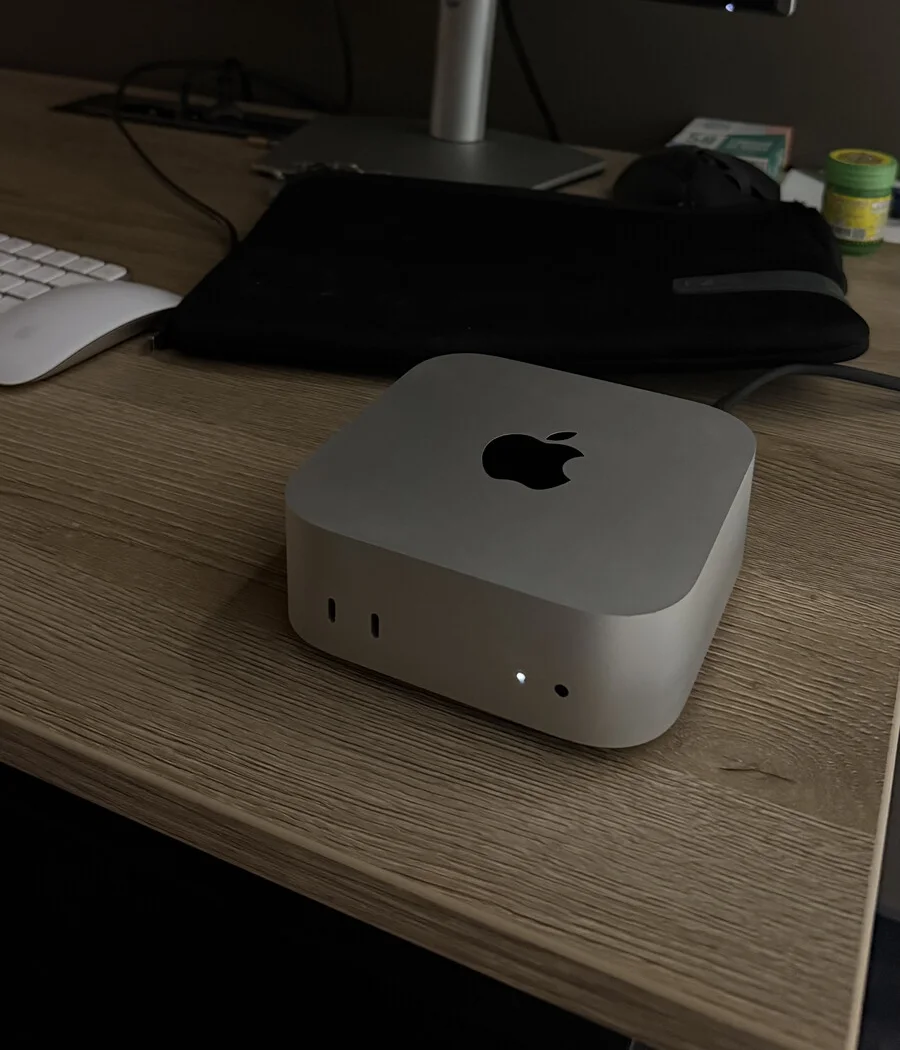
A colleague with accounts
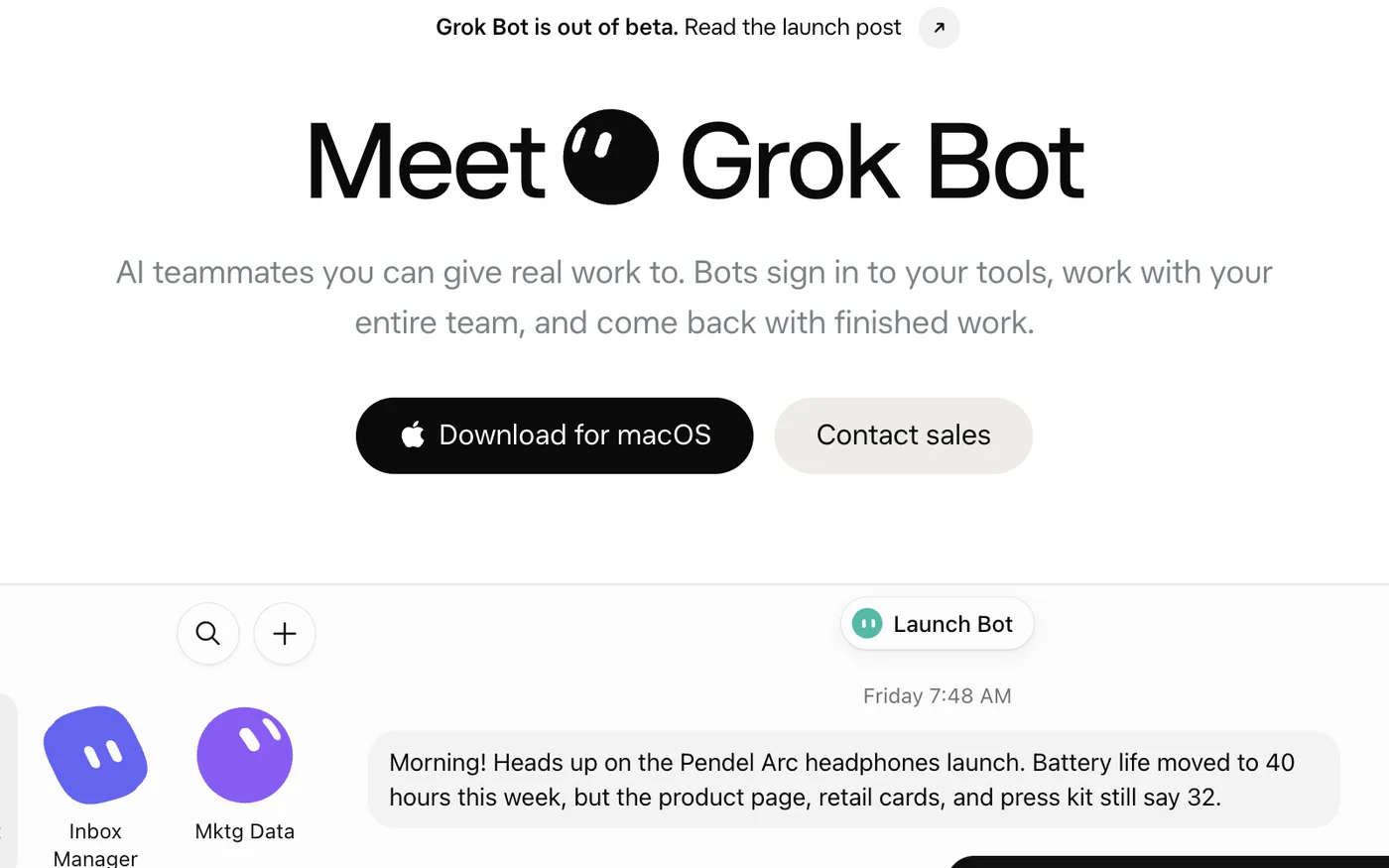
Bob is a plain Mac mini with an orchestration framework Attendu built on top, so that it behaves like a colleague.
Marek compares it to robotics where the robot has no hands: Bob gets accounts on different platforms instead.
Bob sits in Slack, works on development and code quality, and drafts support emails with a colleague.
Most pull requests now come from Bob, Marek says, and it runs mostly on Anthropic models.
When the mobile app gets an update, Bob starts a simulator, records a video, drafts a LinkedIn post and sends the video to a colleague in Slack.
Bob
A plain Mac mini
accounts on different platforms
Code
Pull requests
most of them now
Slack
Sits in Slack
development and code quality
App update
Simulator
records a video
Drafts
Emails and posts
support emails, LinkedIn
A colleague
gets the video in Slack
Why their own machine
There are ready-made always-on agents: you give a model tools and accounts, leave it running, and it works without being asked.
Marek’s priority is to keep the compute on a machine of his own where he can.
He doesn’t want to log ready-made agents into sensitive accounts (a bank is the extreme case), and in this “crazy world” his own machine gives him ”some degree of control.”
It also ends up cheaper, because you don’t pay for processing in the cloud, though some assistants are almost free.
Should other startups build one?
Yes, and he thinks it can be done fairly lightweight.
Two limits
One limit is tokens.
On Opus 5.5 it’s far better, Marek says; on the previous setup colleagues often wrote that Bob had died.
There’s now a workflow for moving him to a new plan.
The other limit is memory.
So many processes run at once that Bob learned to clear his swap, pause tasks, close the simulator and manage his storage, because agents leave gigabytes behind.
How a change reaches production
1 · one model
Writes
the feature
2 · Claude + Codex
Cut, review
a few rounds
3 · Greptile
Grades
5/5
goes to production
New features are also built by a background agent that comes back to a human only when it needs a decision, sometimes with screenshots of three code variants.
Marek thinks people should be most involved at the start of a project: an agent repeats the patterns already in the code, so a wrong turn early leads somewhere else entirely.
They may release some of the tooling, possibly as open source.
What Marek still reads
Does he still read code?
Reading it is one thing, Marek says, and having a pipeline set up so the symptoms tell you it’s right is another.
He no longer cares how an if-else looks.
He looks when a new database schema or data structure appears, and at naming.
What he watches instead is behaviour: when an agent finishes a task that affects users, it should record a handoff video, ideally of the different states.
What agents get wrong
UX, Marek says.
An agent has no feel for what makes sense to a user or fits the business model, so he reviews user flows rather than diffs.
Security went the other way.
An agent asked to look for vulnerabilities helped them find and fix a pile of bugs in the code they had written by hand.
Tools and models
In the last six months more of Marek’s work has gone into the development environment than into Attendu itself, he thinks.
“The sharper your tools, the more efficient you become”: by his rough numbers, productivity went up fivefold.
He keeps the team small on purpose and uses AI so one person can do more.
The catch is that AI lets a team churn out features, so the hard part becomes keeping the product simple for new and existing users: as functions arrive, the unused ones should go.
Nobody understands the models fully, he says, but you can develop a kind of empathy for one, and he keeps asking where it is right now.
Fable 5.2 came out two days before the interview (our post on it covers what changed).
Marek hadn’t tried it, and wouldn’t move everything over, partly because it costs more.
He’d use it as an advisor: Opus does the work, and when you want a very smart friend to weigh in, you start Fable as a sidecar.
He thinks 5.5 is enough for data and business software.
Advice for people starting out
Expertise multiplies AI, Marek says.
A designer friend with years behind him gets much fresher design out of it than Marek does, but struggles with architecture, performance and reliability.
For Marek it’s the other way round: design is where he struggles.
So for beginners it’s a paradox: easier than ever to start, but you still need the basics.
He worries about people who hand their thinking over completely.
His own brain is “cooking more than ever”, at a higher level, about what a decision does to the business and the user, and important decisions stay human: logic recommends one thing, intuition picks another.
To stay relevant, find one area where your brain stays busy, often working with AI itself.
Optimist or pessimist
Asked whether he’s an optimist or a pessimist, Marek first refused the choice: every technology brought bad consequences along with good ones, and AI will too.
He recalls Dario Amodei forecasting that the main diseases could be cured within ten years.
Misuse by people is at least as big a risk, Marek thinks, as AI escaping the labs, which is what the media talk about most.
On whether it’s a bubble, he says the economics may not match reality today, because the whole thing bets on the future.
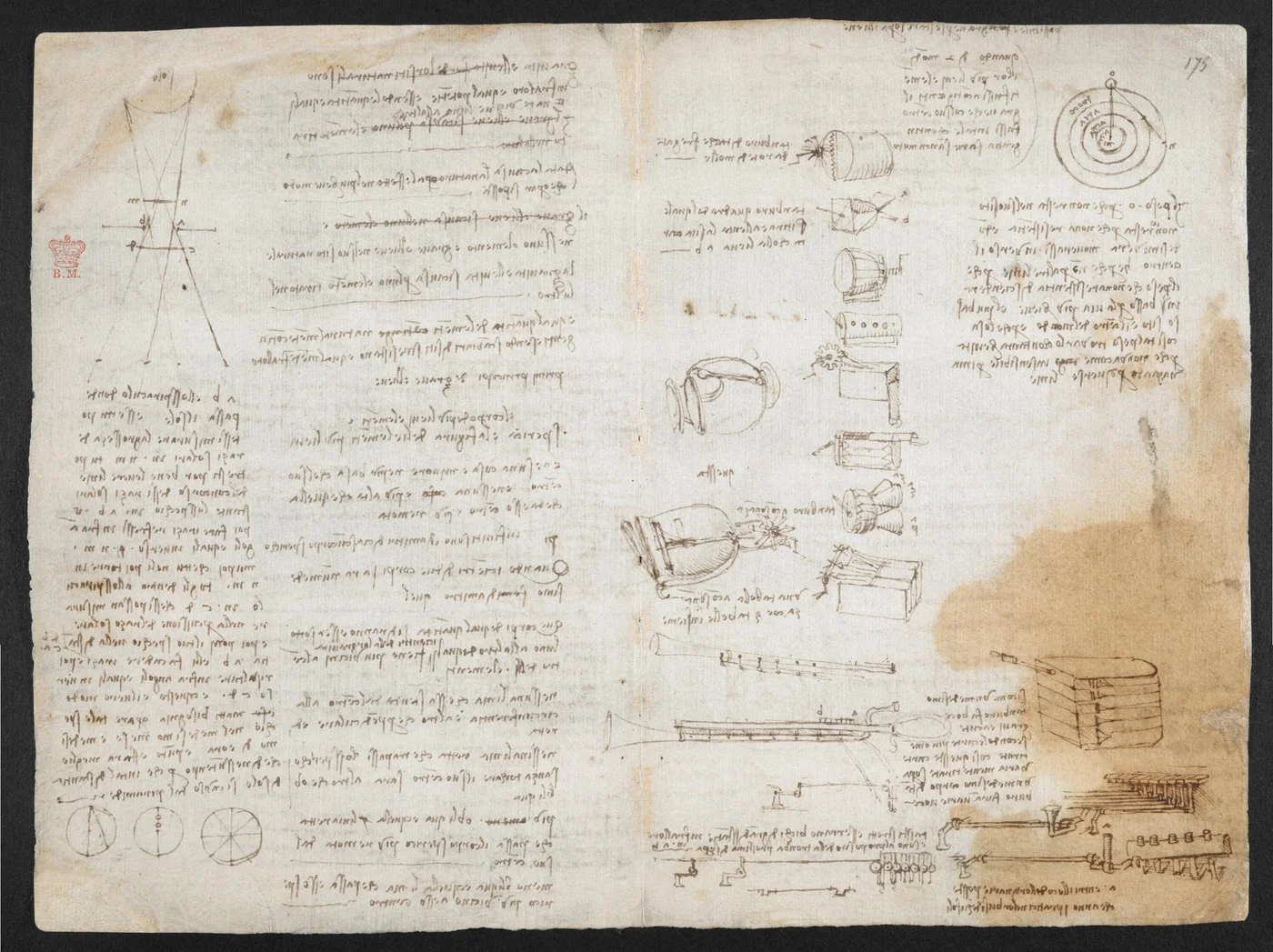
He still calls it one of the most amazing things people have invented, and says Leonardo da Vinci might have wished to hold all human knowledge in his hands.
It also widens a gap every day between people who use it and people who don’t.
He tries to do things that make sense, not feed more into the slop.
Then he took part of it back.
I don’t know whether I’m an optimist or a pessimist, but I’m more excited. When you have an inventive spirit, how amazing it is what this can do outweighs it. And there are so many things I’d like to do and have no time for that it keeps me awake.
Bad consequences
Good ones
Thanks for reading,