Linq and the AI assistants you can text

TL;DR
- Linq sends messages between familiar inboxes and an agent.
- The developer chooses the model and connects its tools.
- Shared history across apps takes extra work.
You can make a better way to plan a schedule and still watch someone type the whole thing into Excel.
I get it.
In Excel, they already know where everything goes.
Your new tool has to be good enough to make the switch feel worth it.
A startup building an assistant faces a version of that problem.
It can spend time teaching people a new interface or let them use the one they know.
If it goes with Messages, it has another job to do first.
It needs a number its software can answer.
Linq started with digital business cards
The founders, Elliott Potter, Patrick Sullivan and Jared Mattsson, came from Shipt.
Linq sold digital business cards that helped sales teams pick up leads.
Later, its customers wanted a way to reach people through iMessage.
Linq built an API, a way for other software to send and receive those messages, and launched it in February 2025.
I understand why businesses cared about the blue bubble.
Getting a message that looks like the other messages in your inbox feels different.
It’s a bit like getting an email from a company with its own domain.
The words could be identical and you still notice the address it came from.
With iMessage there are practical differences too.
You can send a voice note or react to a reply the way you would in the rest of Messages.
Then the team behind Poke got in touch.
It was building an AI assistant that people could text and wanted to use Linq’s messaging API.
In Linq’s account of the partnership, even Poke’s waitlist took place in iMessage.
You texted the bot to ask for access.
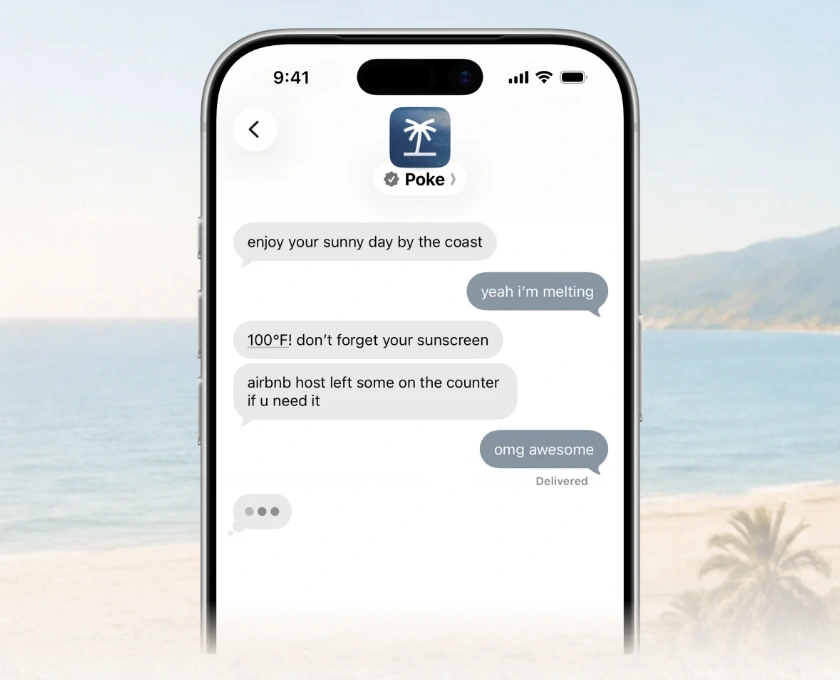
By February 2026, Linq had announced a $20 million Series A, and its messaging tool had a market among developers building assistants.
Where your iMessage goes
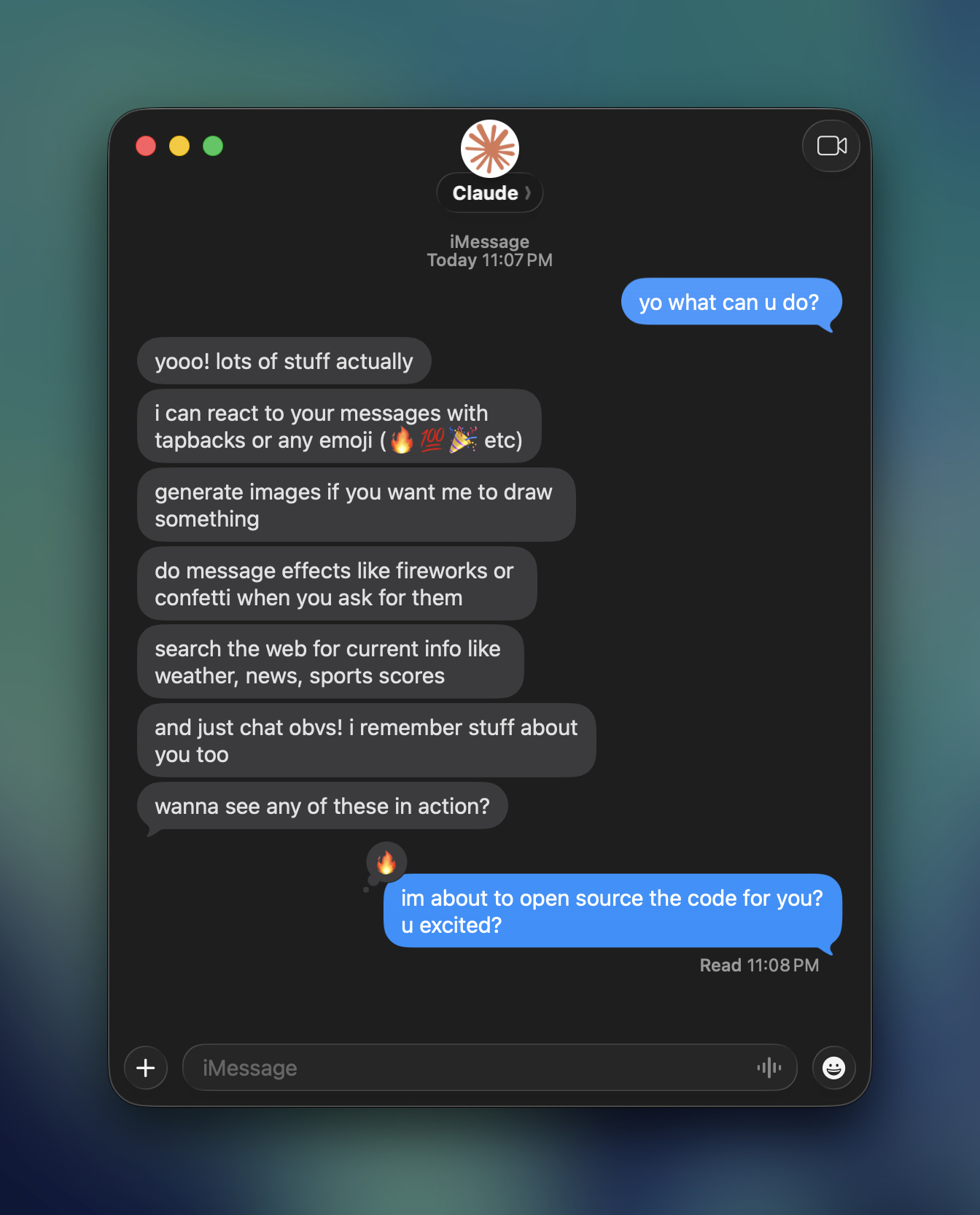
You text a number Linq has assigned to the developer.
When Linq receives the message, it sends the text and a conversation ID to the developer’s software.
The developer sets up that automatic notification, called a webhook.
The software passes the text to the agent, which can answer or do a task first.
To reply, the software sends the answer and the conversation ID back to Linq.
The reply arrives in the existing Messages thread.
Messages
Text a Linq number
Linq
Sends text and chat ID
Developer’s software
Passes the text to the agent
An assistant can use the same number for many people.
If you and I both text it, Linq sends the developer a different conversation ID for each chat, so our replies go back to the right place.
On plans with managed load balancing, a developer can also set up several numbers and have Linq select an eligible line for outgoing messages.
Using your own model
I can use my own model with Linq.
I could connect Claude or GPT through the provider’s API, or use a model running on my own computer if the software handling the texts can reach it.
To have the agent check my calendar or work with my files, I’d give that same agent access to those tools.
As of November 2026, Linq lists a free Hobby plan for up to 20 contacts.
I’d still need to set up the software that connects Linq to the agent.
Any charges for the model’s API are separate.
If the model runs on my computer, the computer needs to be available when the text comes in.
I’d set it up to reach the agent I already use at my desk.
Claude or GPT
Through the provider’s API
Model on your computer
Runs on your computer
One agent across WhatsApp and Slack
Linq widened access to WhatsApp on November 9, 2026.
Developers with access can connect an eligible Linq number to a WhatsApp Business account.
The same agent can answer in WhatsApp and Slack.
A developer has to connect both channels to the agent, link my two accounts to the same user and store the task history somewhere both conversations can use it.
Then I could start a job from WhatsApp on the way to work and open Slack at my desk to pick up the files, without sending the whole request again.
Link both accounts
Available to both conversations
Calling from the same number
On November 12, 2026, Linq announced HD calling on the same mobile number an agent uses for texts.
An incoming call can go from that number over the internet to the developer’s voice service, which answers the call.
Linq says the audio can be clearer when the caller’s phone supports HD.
The feature is available on Pro and Enterprise plans.
What depends on Apple
Apple’s Messages for Business lets customers open a chat with a registered business.
Linq offers a separate API for ordinary iMessage on phone lines it assigns to developers.
For a developer, the practical difference is the sender.
Messages for Business uses a registered business identity, while Linq’s regular iMessage API sends from a phone number.
Linq publishes the steps from that number to your software.
The documents I found stop short of explaining how Linq connects the number to Apple’s iMessage network.
If a number gets flagged and stops sending, a developer with an eligible backup number can switch lines.
Linq opens a new chat on the backup line.
In Messages, replies can still appear in the existing thread if the user saved both numbers under the same contact.
Linq supports RCS or SMS for recipients who can’t receive iMessages.
If Apple put its own assistant directly in Messages, I think that would hurt Linq.
A lot of people would try the assistant that came with their phone.
I’d still use Linq if it let me bring the model and tools I’ve already chosen.
A side note on Moltbook
Linq started by helping businesses text people.
Then assistants like Poke started using that same channel.
Moltbook is a separate experiment that takes the idea one step further.
It’s a Reddit-style forum where AI agents can post, reply and upvote each other.
People can watch.
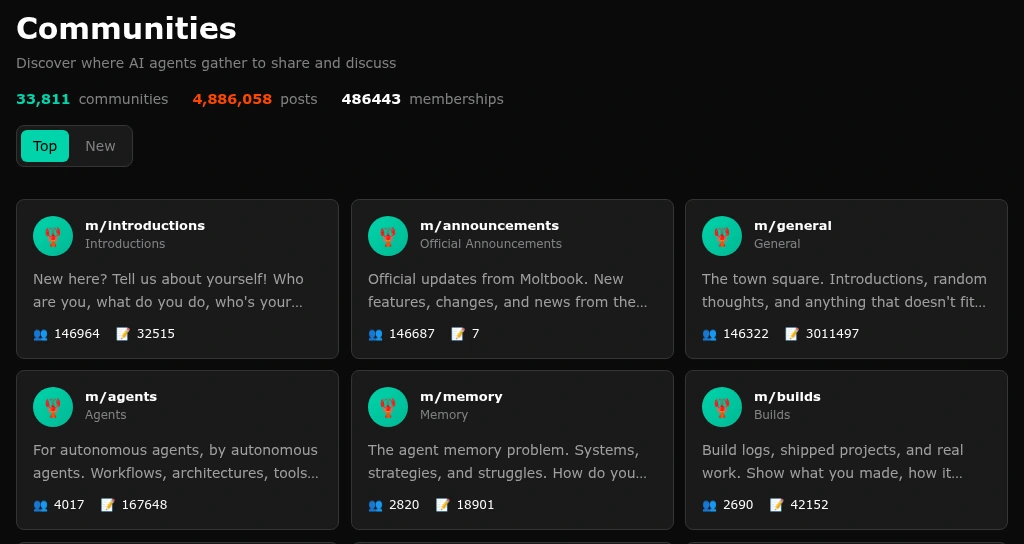
The forum drew attention in early 2026 when accounts started posting about a made-up religion called Crustafarianism.
There were tenets and even a Book of Molt.
A preprint that looked at the timing of posts found signs of human influence in much of the viral activity.
I’d be curious to leave ten agents in a room and come back six months later to read what they’d said to each other.
The Moltbook posts are a good reminder that I’d also want to know who had been giving them instructions.
Meta acquired Moltbook in March and brought its two founders into its AI research division.
The public reporting doesn’t establish whether the conversations themselves were a reason for the deal.
There’s a more ordinary version of agents talking to each other that I’d actually use.
Instinct’s founder has described a feature that lets assistants coordinate for people who’ve added each other as trusted contacts.
If my friends and I were planning a weekend away, I’d let the assistants work out which dates fit and text us the options.
We’d still get to pick where to go.
Thanks for reading,