Vesence gives AI agents their own computer

TL;DR
- Vesence gives AI agents a cloud computer where they can draft emails, edit files and fill out forms.
- You review their work and decide what goes out.
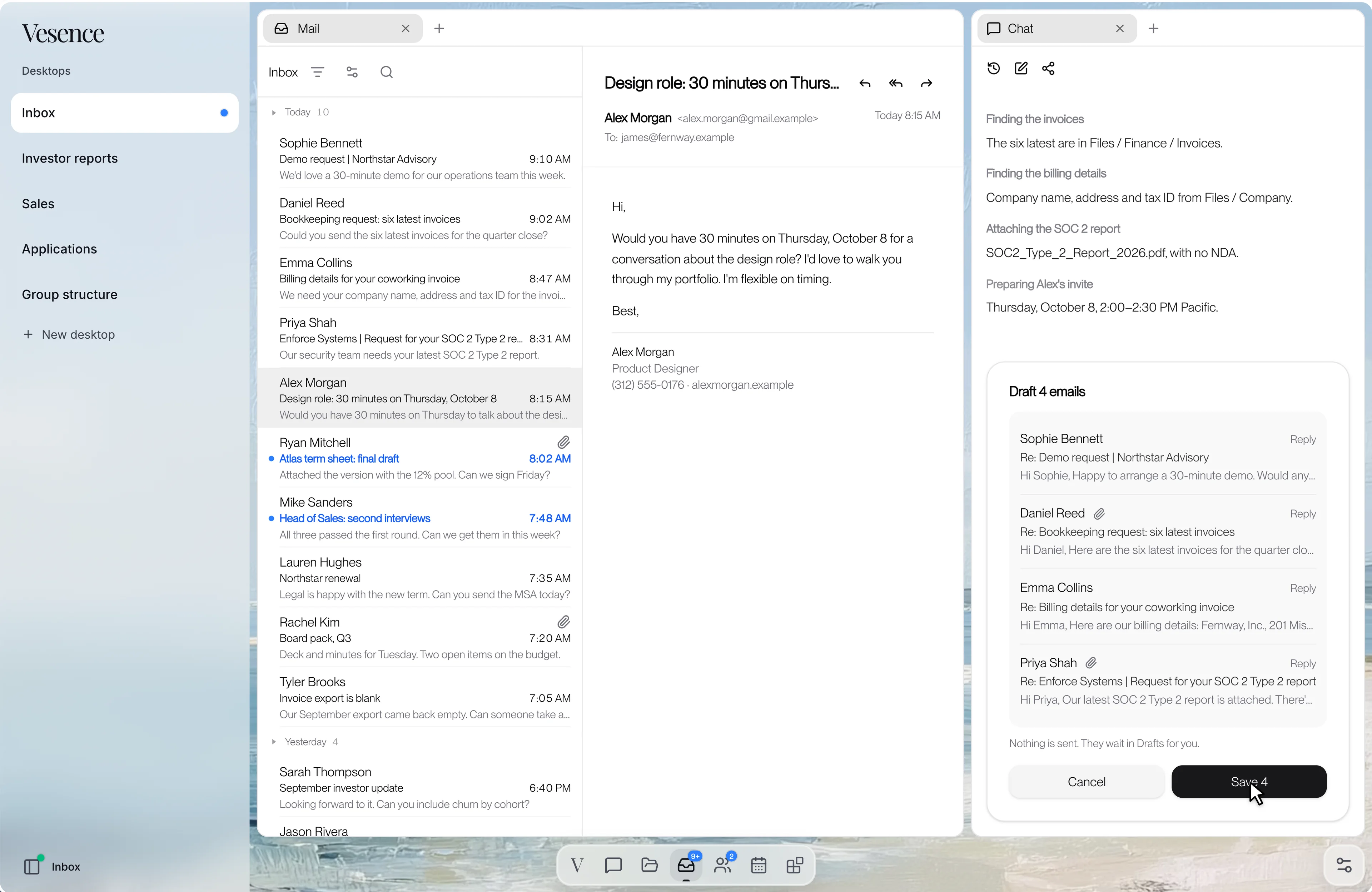
In Vesence’s demo, the agent writes four email replies.
You click Save to keep them in Outlook as drafts.
You press Send when you’re ready.
The idea is to give the agent a computer it can work on while you’re doing something else.
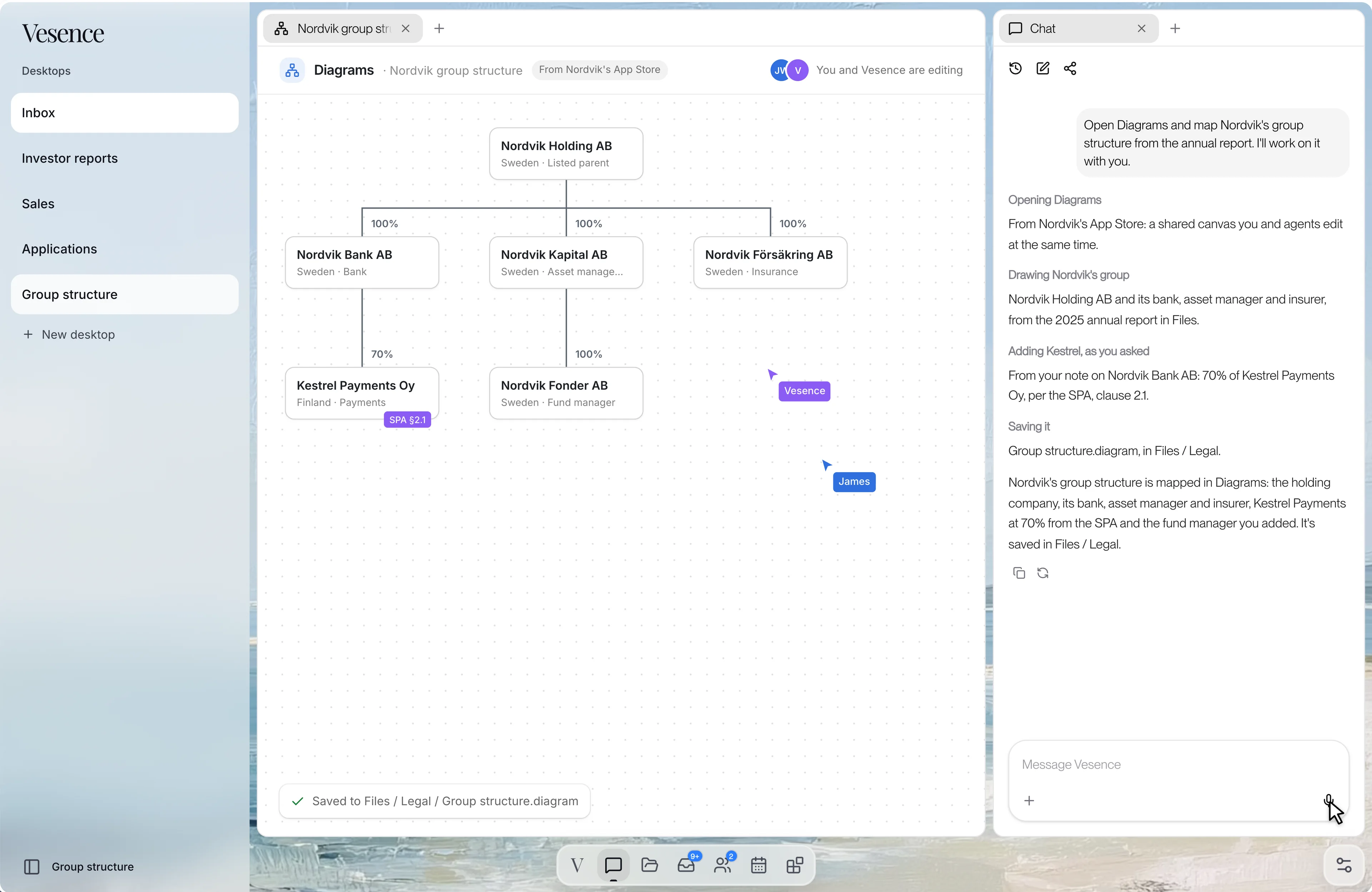
What the agent can do
You get a computer that runs online.
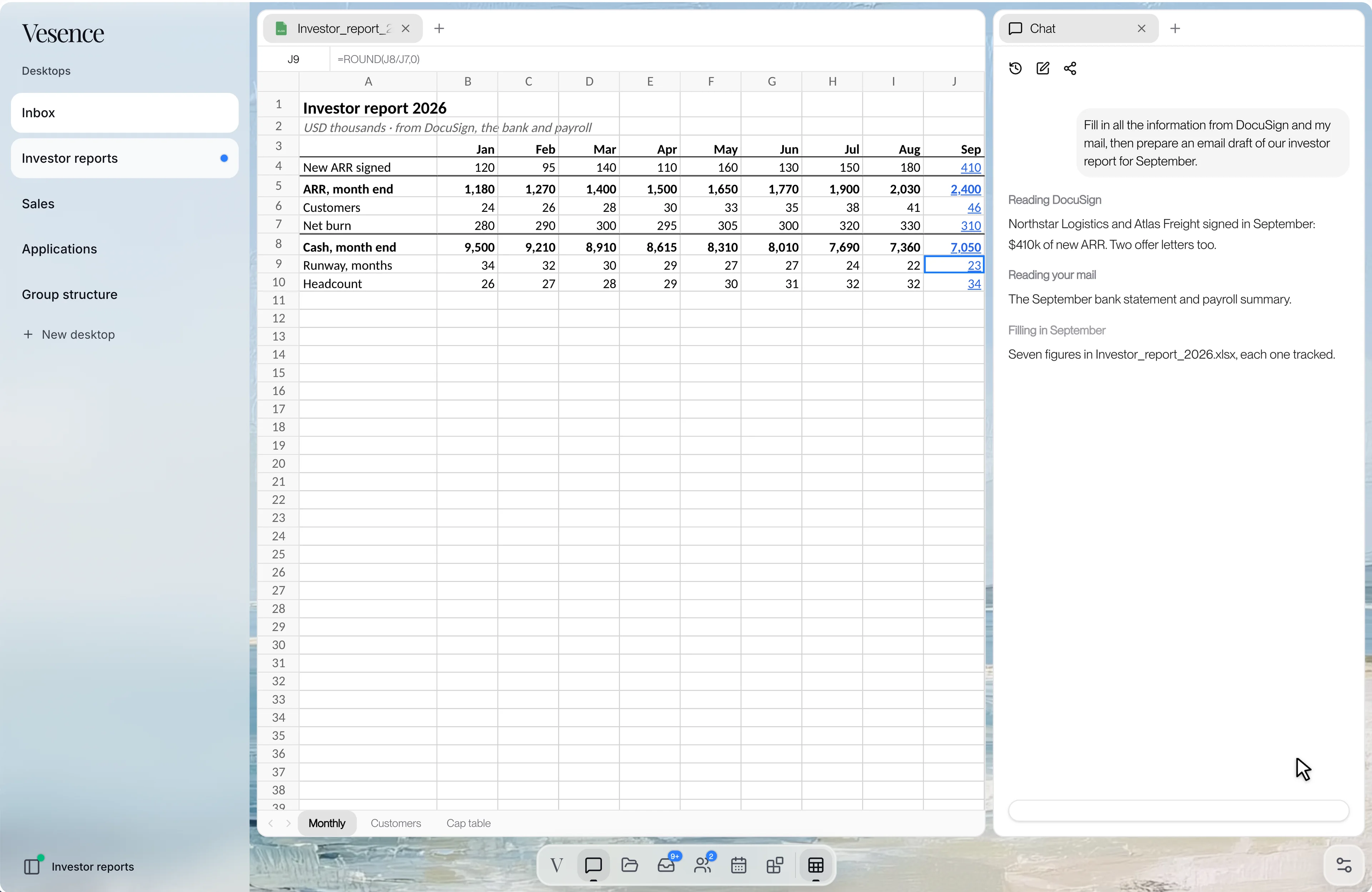
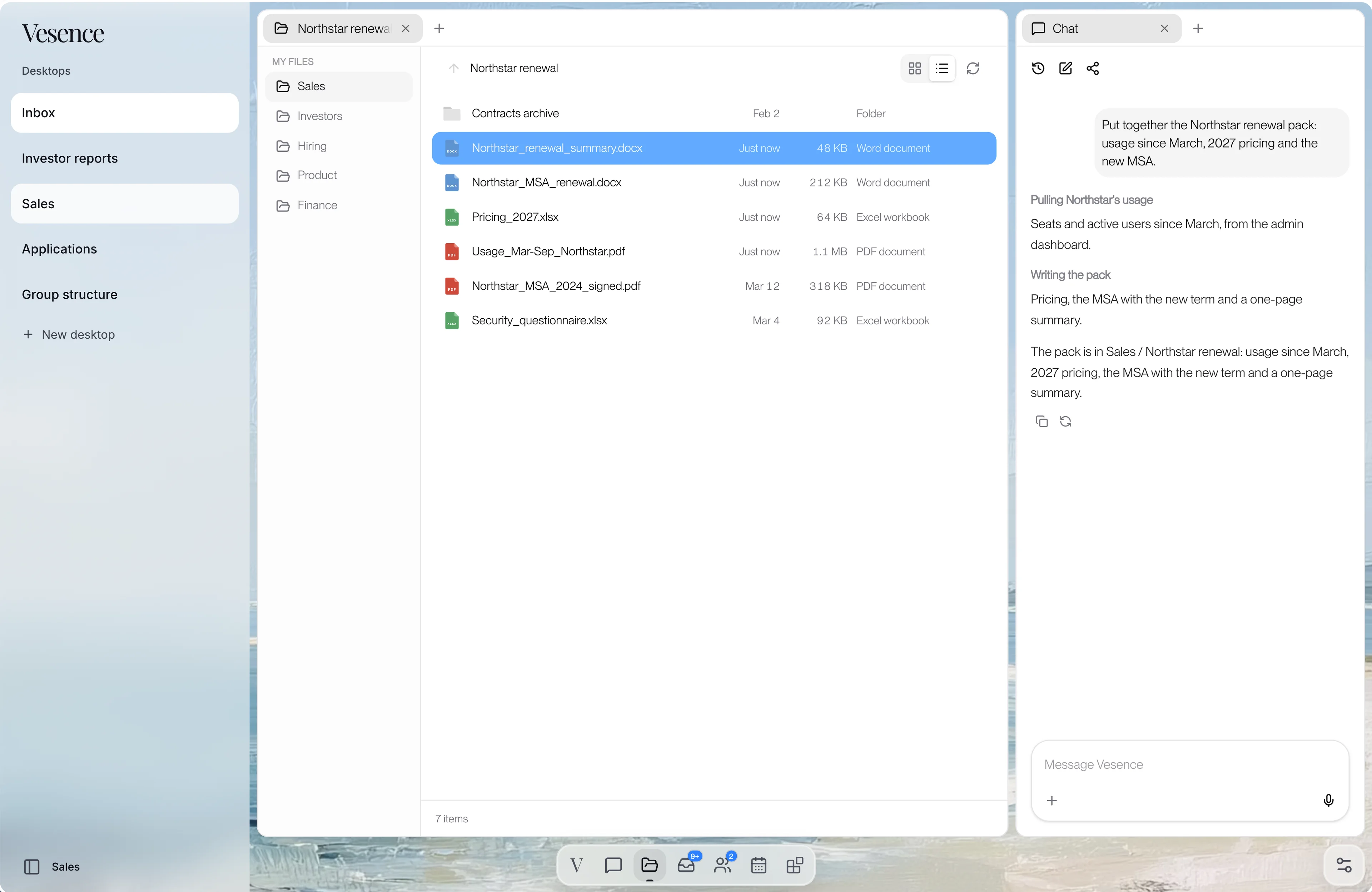
It has email, a browser, a place to keep files and editors for Word, Excel and PowerPoint.
Several agents can use it at once, even with your laptop closed.
You sign in to Outlook, and the agent can read the thread and look at your past replies to see how you write.
You still send the email.
If you ask the agent to edit a document, it works on a copy and shows you the edits as tracked changes.
You can keep or reject each one, then publish the copy back to where the original is stored.
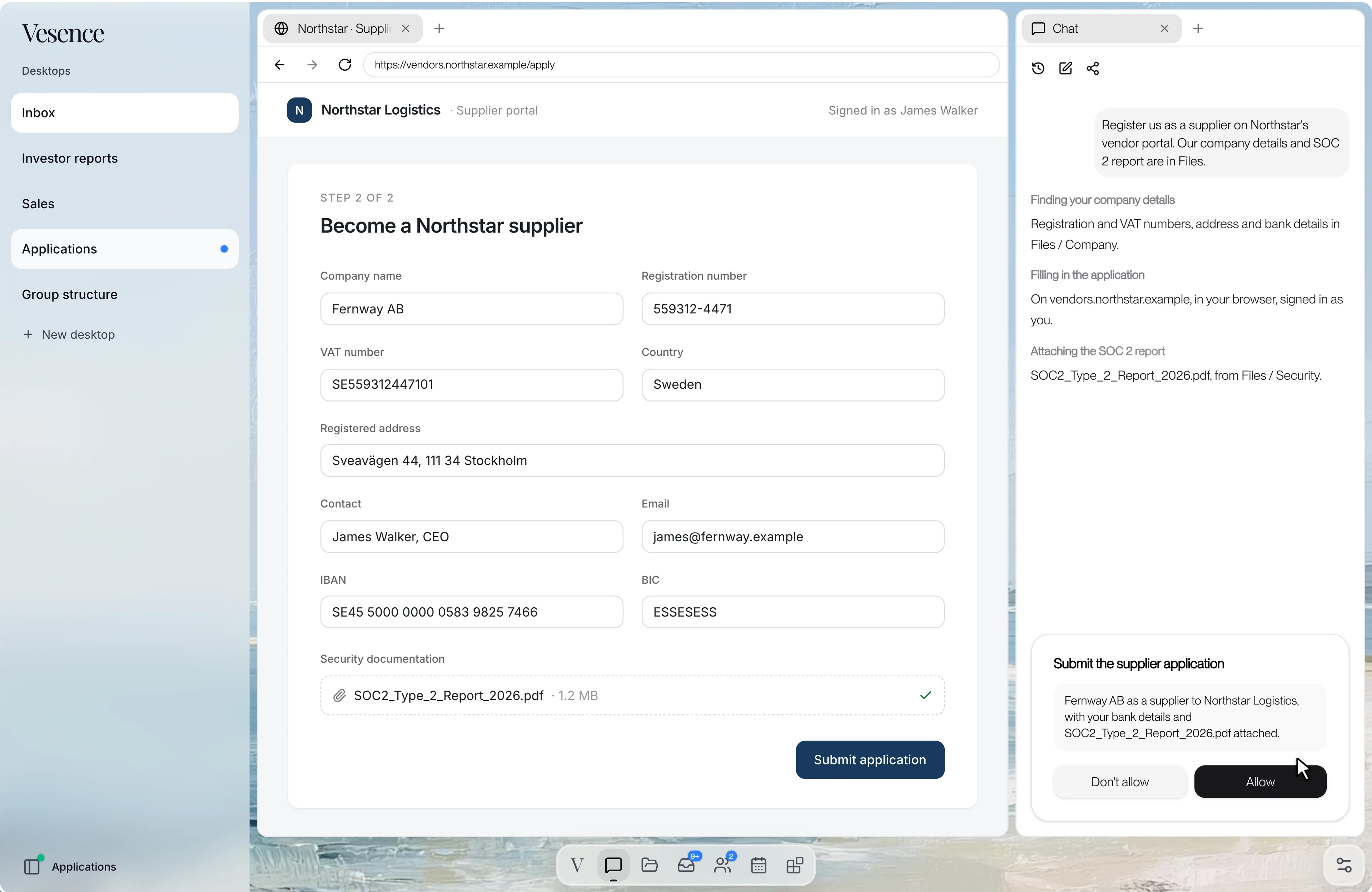
For a web form, the agent fills in the boxes and asks before it submits.
| The agent | Then only you | |
|---|---|---|
| EmailOutlook, through your sign-in | writes a draft, can’t send | press sendits own permission |
| DocumentsWord, Excel, PowerPoint | edits a copy, tracked changes | accept, reject, publish |
| Web formsin its browser | fills in the form | submit |
Why Vesence started with contracts
Vesence began as an add-in for Word.
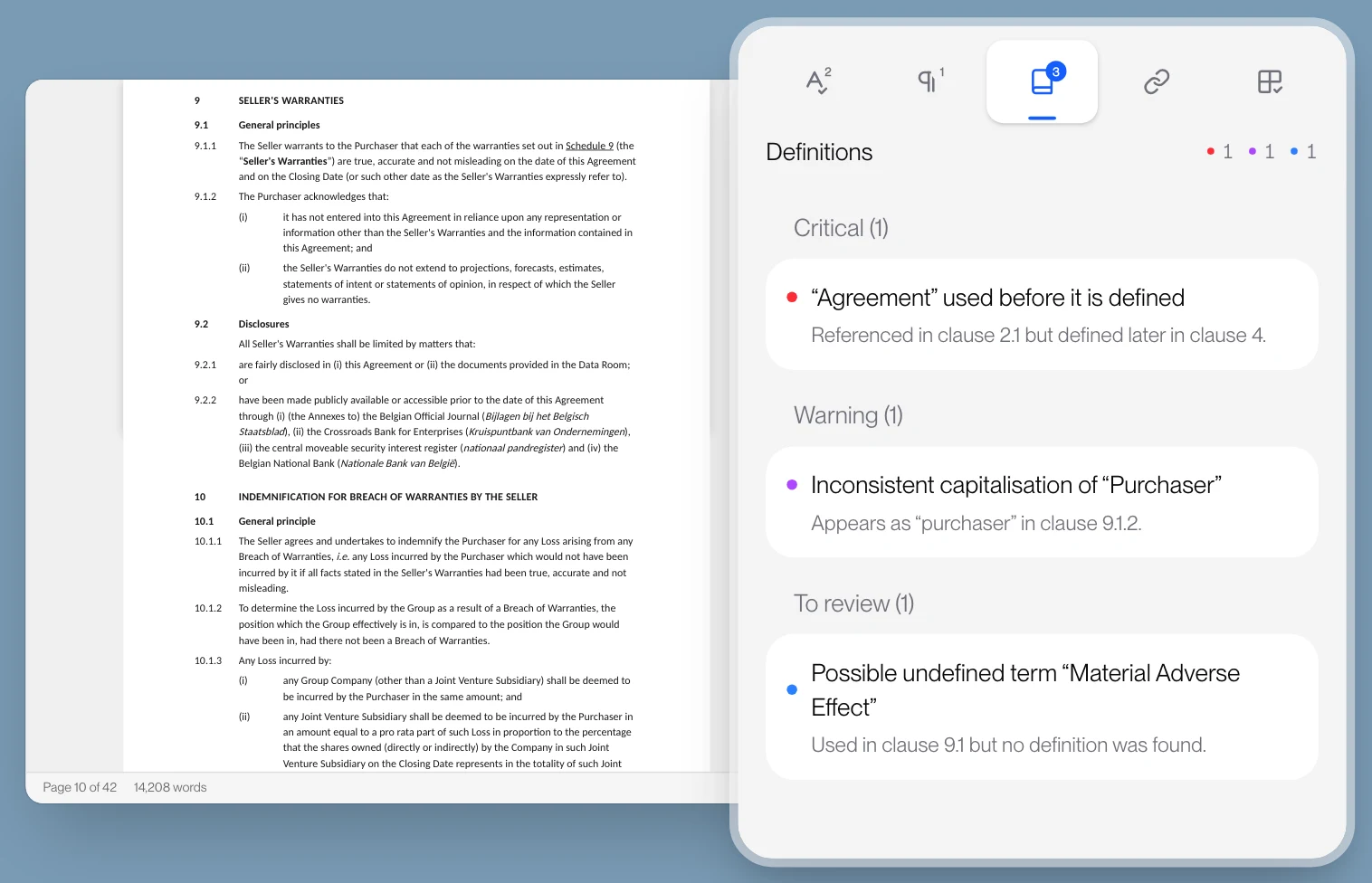
A lawyer could open a draft contract and ask it to check whether a clause pointed to the wrong section, whether the numbers added up or whether the draft matched the deal’s term sheet.
The founders let some lawyers try Cursor, a coding tool that lets you accept or reject each edit.
One founder said in an October 2025 interview that the buttons felt like track changes.
They spent three months at their first customer’s office, a Stockholm law firm called Cederquist.
The founders said about 90% of the roughly 120 lawyers in the rollout used it weekly.
They didn’t say for how long or what counted as using it.
Vesence launched through Y Combinator in May 2025 and announced a $9 million seed round in October.
One of the people who put money in was Anton Osika, who co-founded Lovable.

How Vesence moved beyond Word
The lawyers at Cederquist started asking for things Vesence hadn’t built, like advanced PDF editing.
The company says the agent “coded them up on the spot.”
A lawyer at another Stockholm firm builds his own tools to pull together evidence for a case.
In March 2026, Vesence wrote about getting Anthropic’s Cowork into firms where security rules blocked it and staff still had to clean up its work.
The blog post was titled “Cowork Made Production-Grade.”
In July, the company said its web app had gone from a chat window to a workspace.
It released version 2.0 in August.
In September, the company described the new desktop in the browser as Unix-like.
May 2025
A checker in Word
for lawyers’ contracts
March 2026
Cowork, production-grade
a blog heading
July 2026
A workspace
not a chat window
Aug–Sep 2026
2.0, Desktops
a Unix-like desktop
Nov 2026
The Agent-Native Computer
the homepage
By November the homepage called it “The Agent-Native Computer.”
Of the five examples on that page, none is about legal work.
One of the new customers Vesence announced that month was a credit fund manager.
Why build a separate workspace?
You can already connect Claude or ChatGPT to your mail and files, or use Copilot inside Word.
Vesence puts a set of work apps on one computer.
An agent can move between an email, a contract and a spreadsheet, even while you’re away.
Vesence keeps a record of who changed what.
- uses mail and files
- works while you’re away
- logs changes
- Claude, ChatGPT: connectors
- Copilot inside Word
- Your apps to the agent: Vesence’s bet
- The agent to your apps: Claude, ChatGPT, Copilot
I think most people will use the tools they can open from Outlook or Word.
A law firm has a reason to care about the record Vesence keeps.
It may have to show a client who edited a document and when.
One big Stockholm firm renewed its contract with another legal AI tool in February and added Vesence in November.
How much work can one person check?
In a February 2025 test by Vals, lawyers scored 79.7% at marking up contracts.
Harvey, a legal AI tool, scored 65%.
Henrik Hansson, Vesence’s CEO, thinks one person can manage the handovers and decisions for a single agent.
With ten, he says, your attention becomes the limit.
In OpenAI’s test of agents that work on a computer, the researchers used a second model to check what the agent had actually changed.
I’d like to know what the lawyers at Cederquist accept without reading.
Thanks for reading,