They send balloons up, their AI forecasts the weather
TL;DR
- Every forecast, AI or not, starts from a picture of the air right now, and that picture has gaps, mostly over the oceans. WindBorne, a California startup founded in 2019, flies long-lasting weather balloons into those gaps.
- In a joint NOAA and WindBorne test on 2022 data, adding its balloons cut hurricane track errors by up to 18% in the best case. Since August 2025 NOAA has used the data in its forecasts, under a licence that keeps it away from the public and universities.
- By WindBorne’s own account, a United 737 hit one of its balloons at 36,000 feet in October 2025. The captain had minor cuts, and the company changed how its balloons fly.
Every weather forecast starts with a guess about what the air is doing right now: how warm it is, how wet, which way it’s blowing, at every height.
The model, old or AI, then works out what happens next.
If the starting picture is wrong, the forecast is wrong, however clever the model is.
Google, Microsoft and Nvidia are all building AI weather models.
WindBorne Systems, which grew out of a Stanford student balloon project and became a company in 2019, went after the other half: the picture itself.
Part of it comes from weather balloons, launched from roughly 800 to 900 places around the world, most of them twice a day, almost all on land.
Each one rises, pops after a couple of hours and falls.
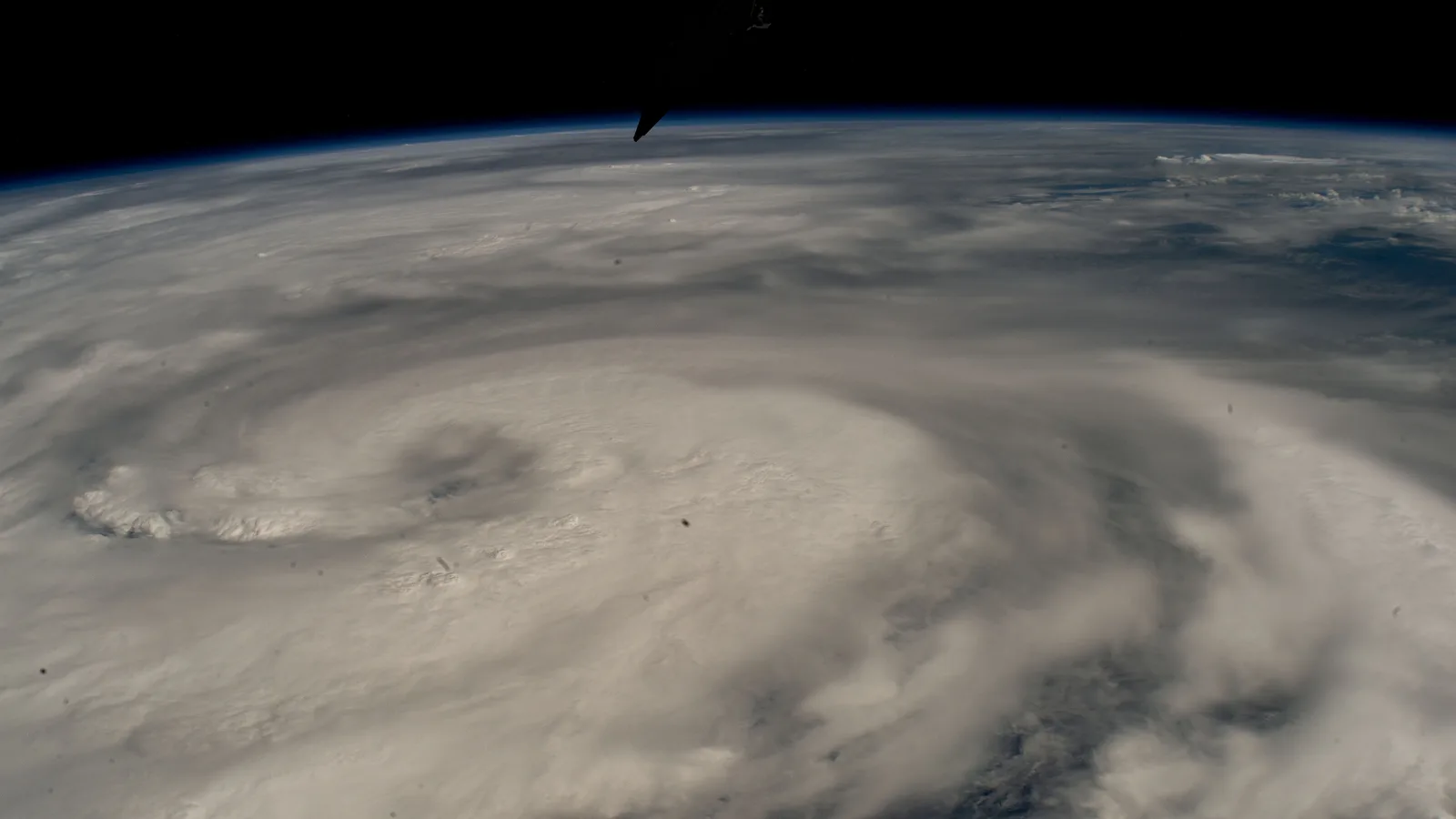
Over the oceans, where hurricanes grow, there are far fewer of them.
Satellites see a lot from above and planes measure the air along their routes, but there are big stretches where nothing measures it from the inside, top to bottom.
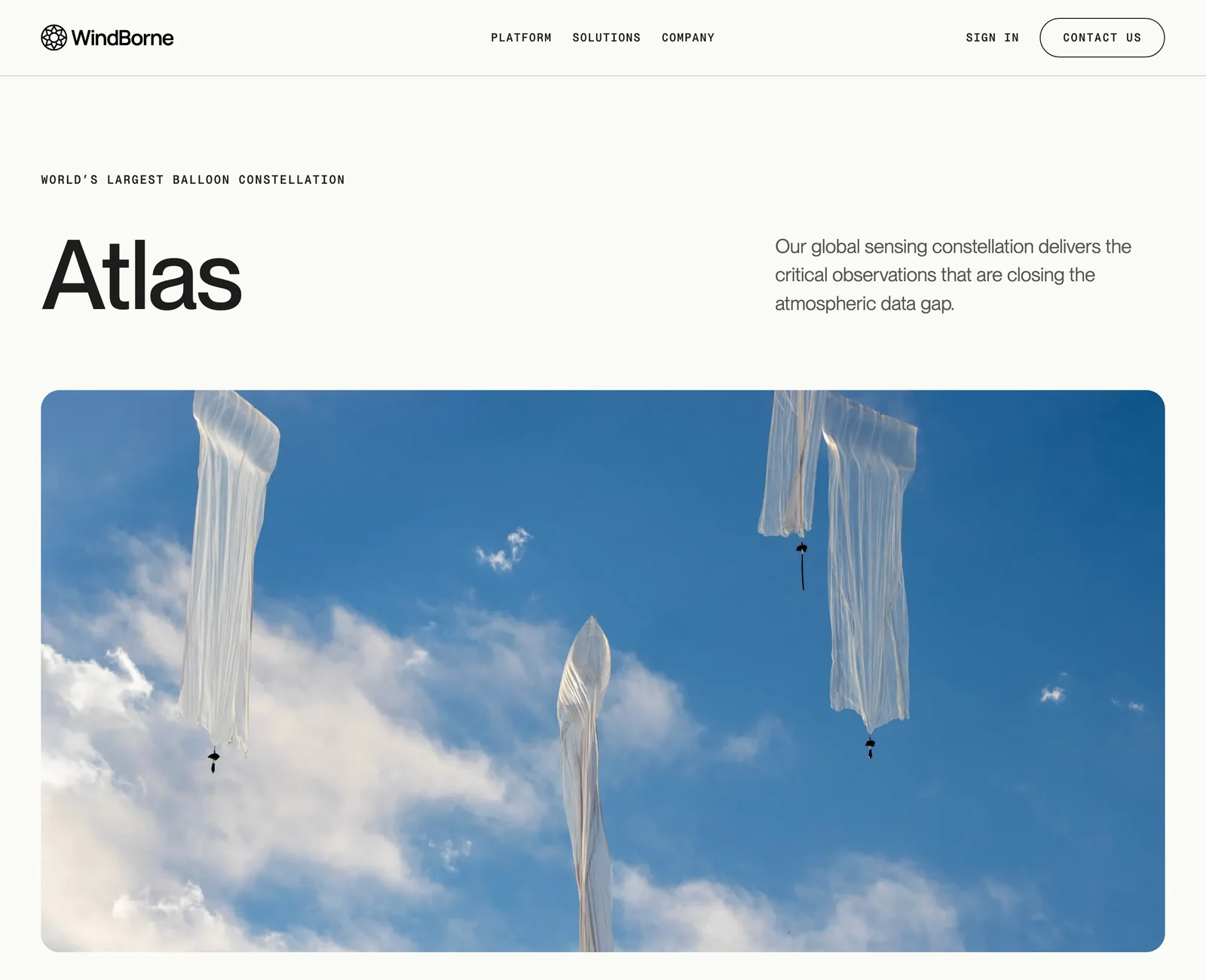
So WindBorne builds balloons that don’t pop.
- Land: nearly all of the 800–900 launch sites
- Oceans: far fewer, and that’s where hurricanes grow
- WindBorne: one balloon, up for about a week
A balloon that steers without an engine
A WindBorne balloon weighs about a kilo at launch, and its ballast is fine sand.
It has no motor.
It steers with one trick: the wind blows in different directions at different heights.
To go up, it drops a pinch of sand.
To go down, it lets out some gas.
Pick the right height and the wind takes you roughly where you want to go.
The software that picks the height runs on WindBorne’s own forecast of the winds.
On the way up and down it measures temperature, humidity and pressure, and its GPS position gives the wind.
It takes a reading every 10 seconds and sends it by satellite every few minutes, so the data normally arrives within 15 minutes.
One flight can go up and down dozens of times, and some last weeks.
The average, in the company’s own paper on a year of flights, was about a week.
~1kg
At launchsand as ballast, no motor
10s
Between readingstemperature, humidity, pressure, wind
15min
Until the data arrivessent by satellite every few minutes
~1week
In the airthe average; some flights last weeks
How far can you push it?
In September 2022, as Ryder Kimball told it in Core Memory, WindBorne’s team flew a balloon from Gainesville, Florida, into Hurricane Ian.
It took about 50 hours to reach the eyewall.
They dropped sand to climb over it, then let gas out to drop into the eye.
Andrey Sushko, the CTO, told Kimball the conditions weren’t that bad: “Flying inside a thunderstorm in Oklahoma is arguably worse in terms of altitude control.”
Does it make forecasts better?
The clearest test I found was a joint study by NOAA, the US weather agency, and WindBorne.
NOAA’s main model, GFS, is free and used all over the world.
The researchers took observations from 169 WindBorne balloons flown over three months in summer and autumn 2022, reran GFS for that period with them, and compared it with the runs without.
Errors in where tropical storms would go dropped by up to 18%, and errors in the broad pressure pattern over the tropics by 2 to 3%.
Since August 2025 NOAA has fed the data into GFS itself.
Two catches.
“Up to” is the best case, not the average.
And the study is a conference abstract written by four NOAA researchers and three people from WindBorne, including the lead author, not an independent audit.
up to 18%
smaller errors in where tropical storms would go, when NOAA’s GFS model got the balloon data
- the data169 WindBorne balloons, three months, summer and autumn 2022
- the testGFS rerun for that period with the balloons and without them
- “up to”the best case, not the average
- who wrote ita conference abstract: four NOAA researchers and three people from WindBorne, including the lead author
What I found more convincing is how open the company’s own technical paper from February 2026 is about what goes wrong.
Humidity is “arguably the most challenging part”.
In daytime sun the temperature sensor reads 1 to 2 degrees Celsius too warm until it’s corrected.
The sensor package still fails to unfold on fewer than 5% of flights a month.
Companies don’t usually write that down.
WindBorne also has its own AI model, WeatherMesh.
The version described in March 2025 made a 14-day global forecast in 12 seconds on a single gaming graphics card.
That version didn’t read the balloons at all.
It started from the analyses NOAA and the European weather centre publish, and it learned from decades of the European centre’s historical weather records.
Since August 2025, the company says, the balloon data goes into WeatherMesh too.
That order makes sense to me.
A fast model is the part others can copy.
Most of the best-known AI weather models learned mainly from that same European archive, so they’ll keep getting closer to each other.
Data that nobody else collects is much harder to copy.
Who pays, and who gets to see it
According to WindBorne’s August 2026 announcement, trading firms were among its first commercial customers, which makes sense when the weather moves energy prices.
Government demand is growing too.
The same announcement says WindBorne raised a $37 million Series B, has raised over $62 million in total, tripled its revenue in a year and now flies more than 600 balloons at once.
Those are the company’s numbers.
Its own paper from February counted an average of 90 in the air in December 2025.
Maybe 600 is a peak and 90 an average; the announcement doesn’t say.
NOAA pays for the data, and its page on it is blunt.
WindBorne’s balloon data “can not be made available to anyone outside of US government agencies”, and “there is no expiration on that restriction”.
No universities, no foreign weather services, no public.
That’s new for weather.
For decades countries have shared their core weather observations free of charge, through the World Meteorological Organization.
Here the public model gets better, but the measurements behind it belong to a company.
I don’t think that’s a scandal (someone has to pay for the balloons), but it’s a different deal from the one weather has run on.
| The forecast (GFS, balloons in it) | The balloon data | |
|---|---|---|
| US government agenciesNOAA pays for the data | free | yes |
| The public | free | nonew for weather |
| Universities | free | no |
| Foreign weather services | free | no |
| NOAA’s terms: “there is no expiration on that restriction” | ||
A balloon at 36,000 feet
On 16 October 2025, United flight 1093 from Denver to Los Angeles was cruising at 36,000 feet over Utah, near Moab, when something hit the first officer’s windshield.
Both pilots were showered with glass, and the captain got minor cuts on his right arm.
The plane, a Boeing 737 MAX 8 with 112 people on board, landed safely in Salt Lake City.
The NTSB’s preliminary report says WindBorne lost contact with one of its balloons, launched from Spokane the day before, that was near the plane at that moment, at almost the same height.
WindBorne says the plane very likely hit its balloon.
The investigators haven’t named a cause yet, and their final report isn’t out.
John Dean, WindBorne’s CEO, didn’t hide behind the rules.
On X he wrote: “I find this extremely concerning, and unacceptable in the case of a collision, regardless of what the official regulations are.”
Five days after the strike the company said it had already changed its software so the balloons spend less time at airliner heights.
It now says they don’t hang around between 30,000 and 46,000 feet at all, use live aircraft tracking data to change height and keep clear of planes, carry lighter payloads, and that air traffic centres can get a report on them every two hours.
It counts one midair impact in more than 11,000 launches.
The plan is to go much bigger.
WindBorne’s mission page talks about “thousands of long-duration balloons” and, one day, to “solve weather forecasting”.
More balloons means more of them crossing airliner heights, and more of them coming down somewhere.
On that, the company says that through a partner, rePurpose Global, it collects and recycles twice as much plastic as it uses, and that it aims to collect at least 80% of its balloons after flight.
That’s a goal.
How many it collects today, it hasn’t published.
Thanks for reading,